On this page
What Makes Epoxy Flooring So Tough?The Hidden Costs of Bare ConcreteChemical Resistance: A Game-ChangerSafety Matters More Than You ThinkQuick Installation, Minimal DowntimeThe Cost-Benefit RealityExpert Tip: Don’t Skip Surface PreparationFinal Thoughts💬 Have Questions About Industrial Epoxy?On this page
What Makes Epoxy Flooring So Tough?The Hidden Costs of Bare ConcreteChemical Resistance: A Game-ChangerSafety Matters More Than You ThinkQuick Installation, Minimal DowntimeThe Cost-Benefit RealityExpert Tip: Don’t Skip Surface PreparationFinal Thoughts💬 Have Questions About Industrial Epoxy?When you walk into a busy industrial warehouse, the first thing you notice is the constant movement—forklifts zipping through aisles, heavy pallets being dropped, and machinery rumbling non-stop. The floor beneath all this activity takes a beating every single day.
I’ve seen warehouses where the concrete floor started crumbling within just two years of operation. The cost of repairs? Astronomical. The downtime? Even worse.
That’s why more and more warehouse managers are switching to epoxy flooring. And honestly? It’s not hard to see why.
What Makes Epoxy Flooring So Tough?
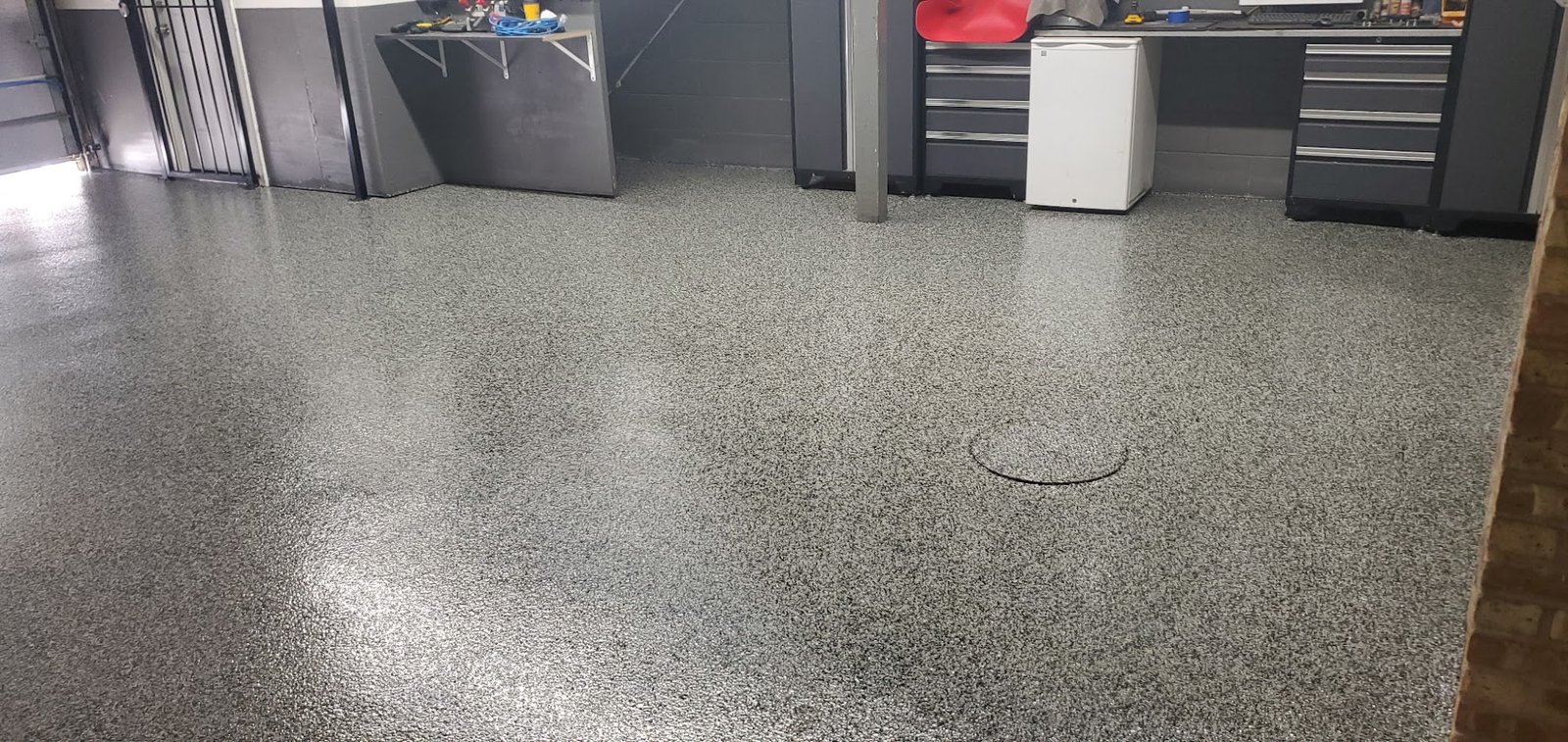
Epoxy isn’t just paint. It’s a thermosetting resin that bonds chemically with concrete to create a surface that’s harder than the concrete itself.
Think of it like this: if concrete is a sponge, epoxy is like wrapping that sponge in armor. Water, chemicals, and oils can’t penetrate it. Heavy loads don’t crack it. And daily wear and tear barely leaves a mark.
Real-World Example:
Just last year, we worked with a distribution center in Houston that was losing $5,000 every time they had to close a section for floor repairs. After installing our 3-layer epoxy system, they haven’t had a single repair in 14 months. Their operations manager told us, “I wish we’d done this five years ago.”
The Hidden Costs of Bare Concrete
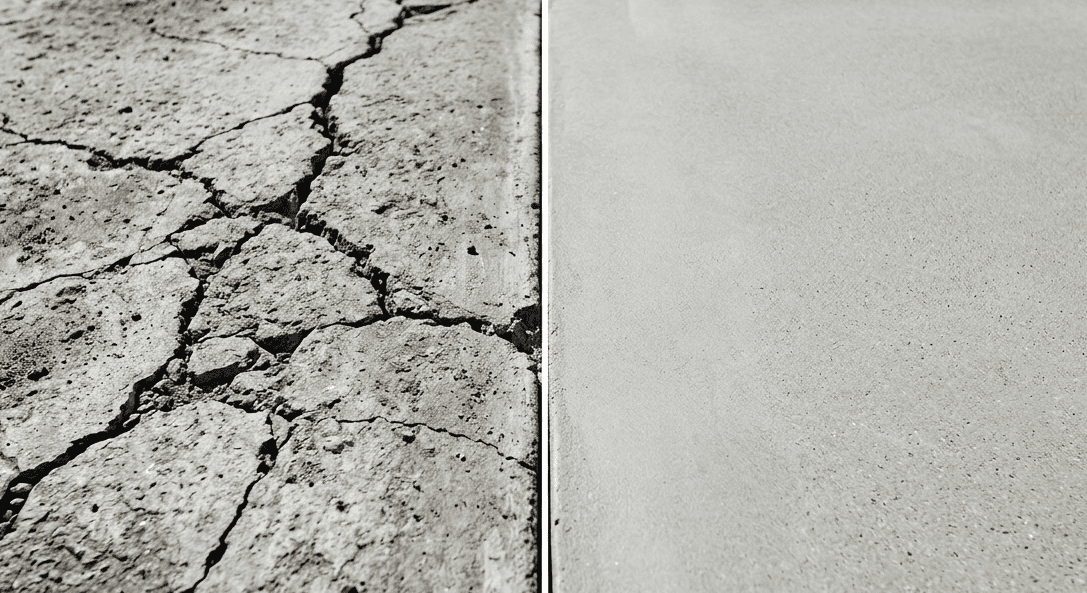
Let me share something most contractors won’t tell you. Bare concrete is never truly “sealed.” It’s porous. That means:
-
Oil spills soak in and leave permanent stains
-
Moisture from below causes the concrete to weaken over time
-
Dust forms constantly from surface erosion
-
Cracks spread every time heavy equipment passes over
One warehouse we visited had dust so bad that their inventory was getting contaminated. They were spending $2,000/month just on extra cleaning. That’s $24,000 a year—money they could have saved with a one-time epoxy installation.
Chemical Resistance: A Game-Changer
Industrial warehouses deal with all kinds of spills:
-
Hydraulic fluid from forklifts
-
Motor oil from maintenance work
-
Cleaning solvents
-
Battery acid from charging stations
Epoxy flooring laughs at all of these. Most industrial-grade epoxies are resistant to over 200 different chemicals. A quick wipe and it’s like nothing happened.
Quick Tip: Always ask your installer for the chemical resistance chart. Not all epoxies are created equal. For heavy chemical exposure, go with 100% solids epoxy—it’s the most durable option.
Planning a warehouse or shop floor?
See how we build commercial systems, from grinding to topcoat.
Safety Matters More Than You Think
Here’s something that doesn’t get talked about enough: safety.
Epoxy flooring can be customized with anti-slip additives. This is crucial in warehouses where spills happen. One slip-and-fall accident can cost a company $40,000 or more in workers’ comp claims alone.
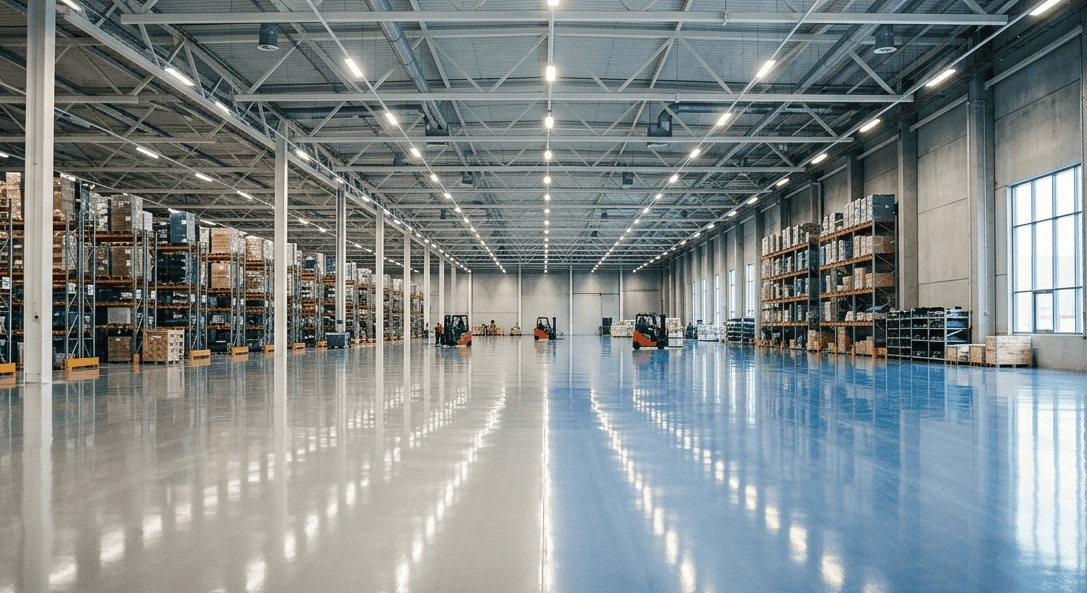
Plus, epoxy floors are highly reflective. They bounce light around the space, reducing the need for additional lighting. One of our clients saved 15% on their energy bills just because they didn’t need as many overhead lights.
Quick Installation, Minimal Downtime
This is the part that surprises most warehouse owners.
Most epoxy installations take 3-5 days—including preparation. Compare that to replacing concrete, which takes weeks.
One of our recent clients had their entire 50,000 sq. ft. warehouse done over a long weekend. They were back to full operations on Tuesday morning.
The Cost-Benefit Reality
Let’s talk numbers.
| Factor | Bare Concrete | Epoxy Flooring |
|---|---|---|
| Installation Cost | $3-5/sq ft (new) | $4-8/sq ft |
| Annual Maintenance | $1-2/sq ft | $0.10-0.25/sq ft |
| Lifespan | 10-15 years | 20-30 years |
| Repairs (annual) | $0.50-1/sq ft | Negligible |
| Dust Control | Requires sealing | Built-in |
Bottom Line: Over a 20-year period, epoxy flooring saves warehouses 40-60% in total floor costs.
Expert Tip: Don’t Skip Surface Preparation
I can’t emphasize this enough—the success of any epoxy floor depends almost entirely on surface preparation.
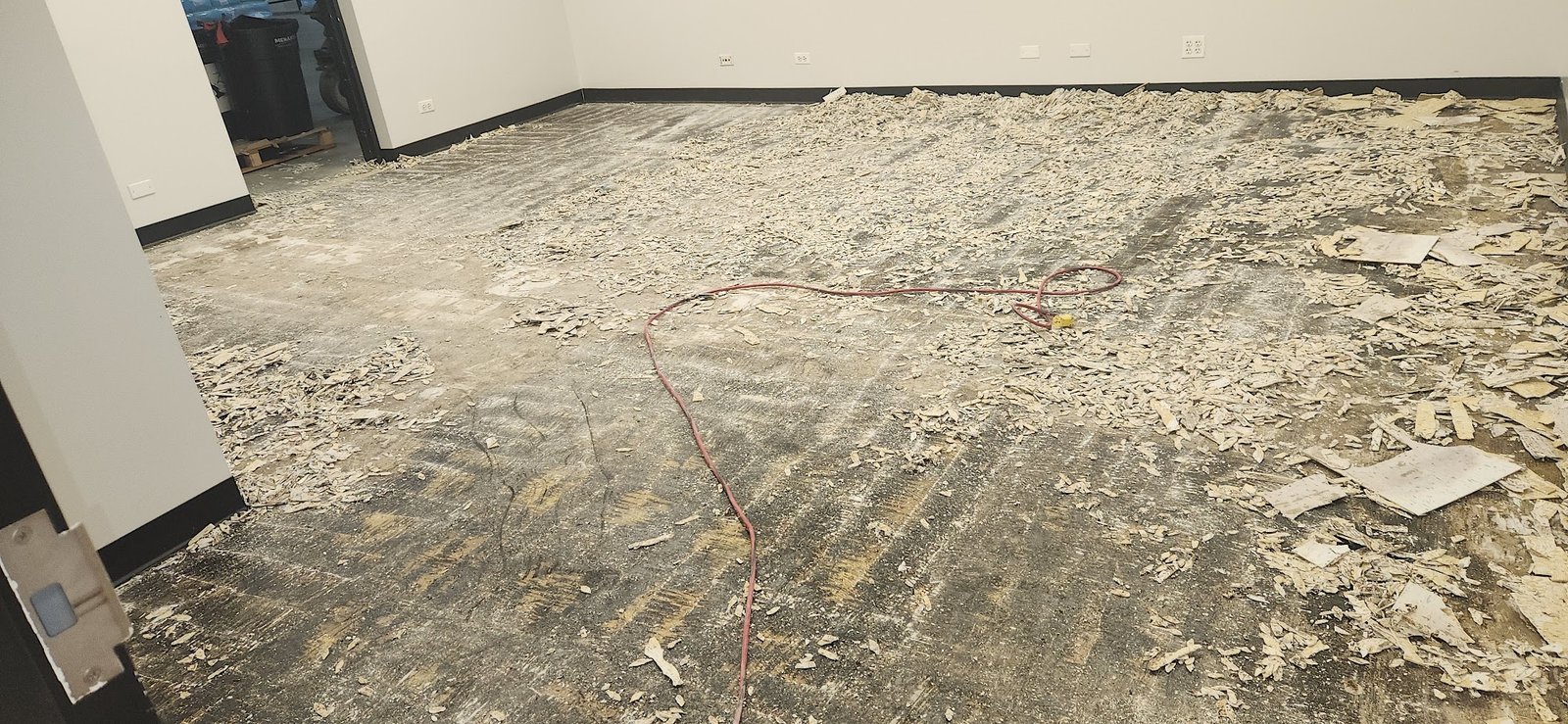
If your contractor doesn’t spend at least 2 days prepping the concrete (grinding, repairing cracks, cleaning), walk away. No amount of expensive epoxy will stick to poorly prepared concrete.
What proper prep looks like:
-
Diamond grinding the entire surface
-
Repairing all visible cracks and spalls
-
Deep cleaning and vacuuming
-
Moisture testing
-
Applying a primer coat
Final Thoughts
After installing over 500 industrial epoxy floors, I can tell you with confidence: it’s one of the best investments you can make for your warehouse.
The upfront cost might seem high, but when you factor in reduced maintenance, improved safety, better lighting, and a 20+ year lifespan, the numbers make sense.
If you’re tired of patching cracks, dealing with dust, and worrying about chemical spills, it’s time to consider epoxy.
💬 Have Questions About Industrial Epoxy?
Drop a comment below or reach out to us directly. We’ve helped hundreds of warehouses switch to epoxy, and we’re happy to share our experience.
This article is part of our complete guide to commercial and industrial floors.
Epoxy, flake, metallic and polished concrete installers serving Chicagoland since 2006. Every article is written from what we see on real slabs.
Get a written number for your floor.
On-site measure and moisture test at no cost.
(773) 908-4913Request Estimate