

Epoxy Floor Maintenance Guide | Long-Lasting Floors

How to Clean and Maintain Your Epoxy Floors to Make Them Last Decades
Congratulations—you’ve installed beautiful new epoxy flooring.
Now comes the important part: keeping it that way.
The good news is, epoxy floors are incredibly low-maintenance. A little knowledge and a few simple habits can keep your floor looking brand new for 20-30 years.
Here’s everything you need to know.
The Golden Rule of Epoxy Maintenance
The easier you are on the floor, the longer it lasts.
That doesn’t mean you have to tiptoe around. Epoxy floors are tough. But a little care goes a long way.
Daily Cleaning Habits
1. Sweeping
Best Tool: A soft-bristled push broom.
Why: Dust and dirt act like sandpaper. Every time you walk on it, those particles grind against the epoxy. Over time, they create a dull, worn look.
Pro Tip: Get a dustpan with a rubber edge—it won’t scratch the floor.
2. Dust Mopping
If you have a garage or commercial space, use a dust mop with a microfiber head. It picks up fine particles that sweeping misses.
How Often: At least once a week. In high-traffic areas, daily is better.
3. Spot Cleaning
Spills happen. When they do, clean them immediately.
For General Spills: A damp mop or cloth with a mild cleaning solution works fine.
For Oil and Grease: Use a degreaser designed for epoxy floors. Avoid harsh solvents that might damage the top coat.
For Chemicals: Most chemicals won’t hurt epoxy, but clean them quickly to prevent staining.
Weekly Cleaning Routine
1. Damp Mopping
What You Need:
-
Warm water
-
Mild pH-neutral cleaner
-
A soft mop (microfiber is best)
How To Do It:
-
Sweep the floor first
-
Mix cleaner according to instructions
-
Mop the floor in small sections
-
Rinse the mop frequently
-
Let it air dry (or use a squeegee for large areas)
Pro Tip: Don’t use vinegar or ammonia-based cleaners. They’re too acidic and can damage the epoxy over time.
What Not To Use:
-
Bleach
-
Ammonia
-
Vinegar
-
Industrial degreasers
-
Abrasive cleaners
The Right Cleaner: Look for pH-neutral cleaners. These are usually labeled “safe for epoxy” or “safe for urethane floors.”
Monthly Maintenance
1. Deep Cleaning
Once a month, do a more thorough cleaning:
-
Sweep and mop as usual
-
Use a soft scrub brush for stubborn stains
-
Rinse with clean water
-
Dry with a mop or squeegee
2. Check for Damage
Walk around and look for:
-
Scratches
-
Chips
-
Peeling edges
-
Discoloration
Catch small problems early before they become big problems.
Warning: If you see peeling, it’s usually a sign of moisture or poor adhesion. Contact a professional immediately—don’t try to fix it yourself.
Annual Maintenance
1. Professional Inspection
Once a year, have a professional inspect your floor. They can spot issues you might miss and recommend maintenance if needed.
2. Re-coating (If Needed)
With proper care, most epoxy floors last 20+ years without re-coating. However, in extremely high-traffic areas, you might need a fresh top coat every 5-10 years.
What About Scratches?
Epoxy is tough, but it can scratch.
Common Causes:
-
Dragging heavy furniture
-
Dropping sharp tools
-
Pet claws
-
High heels
How to Handle Scratches:
-
Minor scratches: Buff with a fine compound
-
Deeper scratches: A professional can fill and re-coat
Prevention:
-
Use furniture pads
-
Place mats at entryways
-
Don’t drag things across the floor
-
Keep pet nails trimmed
Protecting Your Epoxy Floor
1. Entryway Mats
Place mats at every entrance. This catches dirt and debris before it reaches the floor.
2. Furniture Protection
Use felt pads under furniture legs. This prevents scratches and gouges.
3. Car Protection
When you park a car on an epoxy floor, the rubber of the tires can sometimes transfer a mark to the floor. This is known as “tire rubber staining.” It’s usually harmless and cleans easily.
Pro Tip: If you’re parking a car for a long time, consider using a small rug or mat under the tires.
4. Avoid Dragging
Don’t drag heavy items across the floor. Lift them or use a dolly with rubber wheels.
Common Mistakes to Avoid
❌ Using a Pressure Washer
Pressure washers can damage the epoxy surface. Use a mop instead.
❌ Using Regular Mop
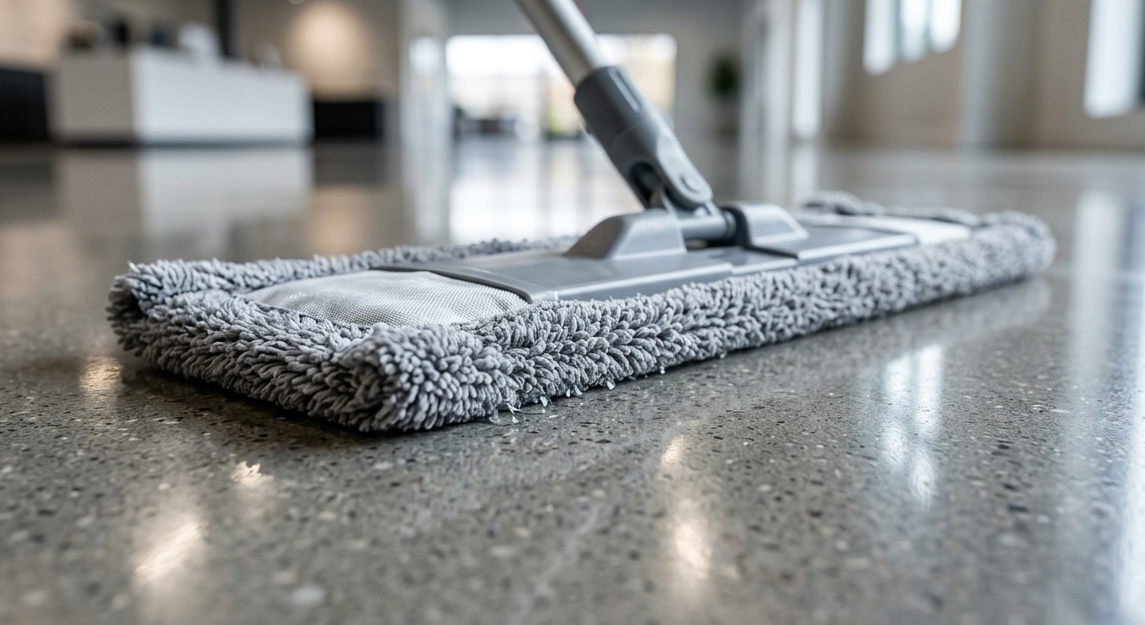
The old “string mop” can leave residue. Use a microfiber flat mop instead.
❌ Not Cleaning Spills Quickly
Even though epoxy resists stains, spills can still leave marks—especially if they’re acidic or greasy.
❌ Using Vinegar or Ammonia
As mentioned earlier, these are too harsh and can degrade the epoxy over time.
❌ Ignoring Cracks
Even small cracks can let moisture through. Address them promptly.
Real-World Examples
Residential Garage:
A client’s epoxy floor is now 12 years old and still looks new. They follow a simple routine: sweep weekly, mop monthly, and never drag heavy items. That’s it.
Commercial Showroom:
An auto dealership with heavy daily foot traffic does a gentle mop every night and a deep clean every weekend. After 8 years, they’ve only had to do one minor touch-up.
Industrial Warehouse:
Our largest client does daily sweeps, weekly mops, and an annual professional inspection. They’ve saved over $100,000 in potential concrete repairs by maintaining their epoxy properly.
Final Checklist
| Task | Frequency |
|---|---|
| Sweep | Daily or weekly |
| Dust Mop | Weekly |
| Spot Clean Spills | Immediately |
| Damp Mop | Weekly |
| Deep Clean | Monthly |
| Professional Inspection | Annually |
Expert Tip: The “Walk-Off” Rule
One of the best maintenance tips I’ve ever heard is the “walk-off” rule:
Every time you walk on the floor, you should be prepared to “walk off” any dirt or debris before it gets ground in.
This is especially important in garages. Keep a small broom or dustpan near the entrance. A quick sweep takes 30 seconds but can extend the life of your floor by years.
The Bottom Line
Epoxy floors are one of the most durable investments you can make for your property. With minimal effort—a sweep, a mop, and a little care—your floor will stay beautiful for decades.
Most of the “damage” we see on epoxy floors comes from neglect, not heavy use. The maintenance is so simple that there’s really no excuse not to do it.
So take care of your floor, and it’ll take care of you.
Have Questions About Maintenance?
We’re always happy to help! Leave a comment below or reach out to us for more specific advice for your floor.