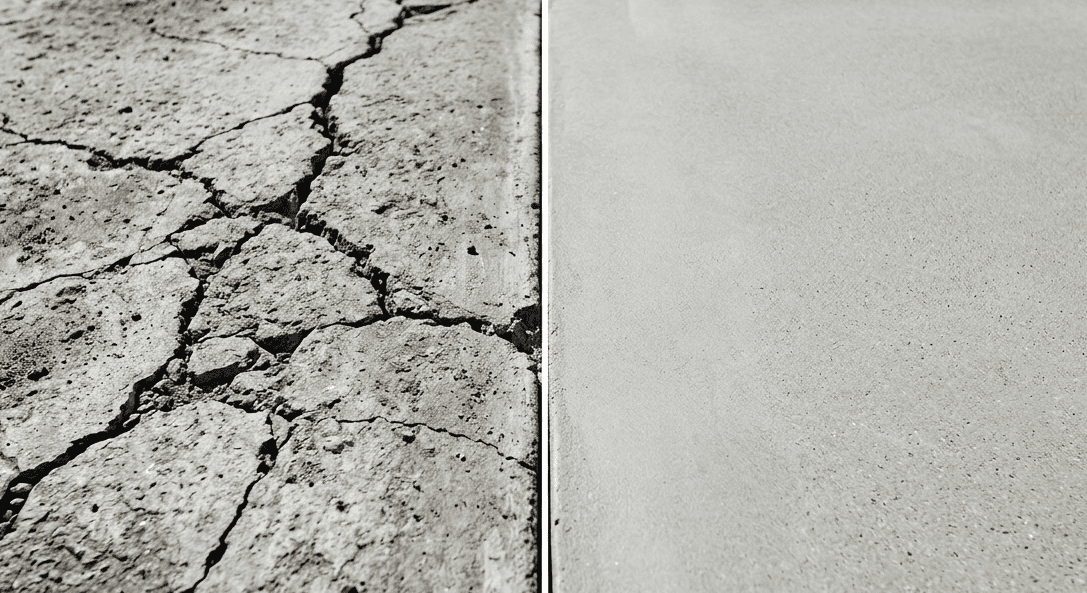
You see a crack in your concrete floor. Maybe it’s small. Maybe it’s only a hairline. Perhaps you think, “It’s been there for months—it’s fine.”
However, let me tell you something from experience: that crack is not fine. I have been in this industry for years, and I have seen what happens when people ignore concrete cracks. Spoiler alert: it is never good.
Why Cracks Appear
Concrete has one major weakness: it cracks. Here is why this happens:
1. It’s Designed to Crack
Here is something most people do not know: concrete cracks are actually expected. That is exactly why you see those lines cut in large concrete slabs. They are called “control joints,” and their purpose is to guide the cracking so it happens in predictable, controlled places.
2. Soil Movement
The ground beneath your floor moves constantly. When soil expands or contracts due to moisture changes, the slab above it shifts. As a result, cracks form over time.
3. Temperature Changes
Concrete expands in heat and contracts in cold. This constant expansion and contraction puts stress on the material, which eventually leads to cracking.
4. Heavy Loading
When you drive a heavy vehicle onto a garage slab or place heavy equipment in a warehouse, you are putting stress on the concrete. Consequently, that stress causes cracks to appear over time.
5. Poor Initial Preparation
Sometimes the problem started on day one. For instance, if the concrete was not properly mixed, cured, or reinforced, cracks will appear much faster than they should.
The Domino Effect of Ignoring Cracks
Let me walk you through what happens when you ignore a crack.
Stage 1: The Hairline Crack
It is tiny and barely noticeable. You might even wonder if it is worth repairing. However, the reality is that even a hairline crack is an entry point for moisture. Furthermore, moisture leads to more problems, as you will see below.
Stage 2: Water Seeping In
Water enters through the crack. In winter, it freezes and expands, making the crack wider. In summer, it evaporates and leaves behind mineral deposits that weaken the surrounding concrete. For example, a small repair costing around $200 could have fixed the crack. Now you are looking at a much larger repair costing around $800.
Stage 3: Damage to the Foundation
If moisture continues to penetrate the crack, the steel reinforcement inside the concrete can start to rust. Rusting metal expands, causing the concrete to break off in chunks. At this point, you are facing serious foundation repairs that can cost $5,000 or more.
Stage 4: Trip Hazards
Once a crack becomes severe, the two sides of the slab can separate. This creates a trip hazard that could injure someone. Moreover, a slip-and-fall lawsuit can cost $50,000 or more—and these are real numbers.
Stage 5: Lower Property Value
A cracked, damaged floor makes a property look poorly maintained. Whether you are selling a home or leasing a commercial space, buyers and tenants will notice. In fact, the potential loss of property value can reach 10 to 15 percent of its appraised value.
The Right Way to Repair Concrete
The Wrong Way: DIY Patching
I have seen countless attempts at DIY concrete repair. Unfortunately, most of them fail within 6 to 12 months. Why is that? For one thing, the patch material does not match the existing concrete. Additionally, no bonding agent is used. The crack is also not opened up enough for the patch to stick. Finally, moisture issues are not addressed first.
The Right Way: Professional Crack Repair
A professional concrete repair includes several important steps. First, using a diamond blade grinder, we open the crack slightly to create a clean surface for bonding. Next, a bonding primer is applied to ensure the repair material adheres properly. Then, depending on the crack size, we choose either epoxy injection for hairline cracks, filler for larger cracks, or polyurethane foam for structural cracks. After that, the final step is sealing the surface to prevent moisture from getting in and to create a finished look. Furthermore, if you are planning to coat the floor with epoxy later, we can incorporate the repair seamlessly into the preparation.
Cracks in your garage or shop floor?
See how we repair them before any coating goes down.
Real-World Horror Stories
Case 1: A Commercial Warehouse
A warehouse manager called us because their concrete floor was “crumbling.” When we arrived, we found hundreds of cracks that had been ignored for over five years. The repair required grinding the entire surface and applying a half-inch thick resurfacing system. As a result, it cost them $80,000—ten times more than if they had addressed the issues when they first appeared.
Case 2: A Residential Garage
A homeowner called us because they had noticed a small crack in their garage floor that had been there for years. By the time they called, the crack had grown from 1/16 inch to over 1/4 inch wide. We found water was seeping up from below, causing the concrete to heave. Consequently, the cost of the repair was $4,000. For comparison, the original repair cost when the crack first appeared was only $300.
Case 3: A Retail Store
A store owner noticed a hairline crack forming in the center of their showroom. They called us immediately. We injected epoxy into the crack and sealed the surface. The total cost was $600. It has been four years and the crack has not returned. They tell me every year that was the best $600 they ever spent.
When You Should Call a Professional
Call a professional immediately if you see any crack forming no matter how small. Likewise, call if the crack is more than 1/16 inch wide, or if you see water coming through the crack. Similarly, you should call if the concrete is breaking or chipping, if the crack is in a load-bearing area, or if you notice the floor surface is uneven.
On the other hand, you can wait if the crack is purely cosmetic and under 1/16 inch wide. You can also wait if the crack is in a non-structural area and is not expanding. However, even cosmetic cracks should be addressed because they are still an entry point for moisture and dirt.
The Cost Comparison
Ignoring the crack costs nothing now but could cost thousands later. Meanwhile, a DIY patch costs between $20 and $50 and takes 2 to 3 hours. A professional crack repair for a small crack costs between $200 and $500 and takes 2 to 4 hours. For larger cracks, a professional repair costs between $1,000 and $2,500 and takes 1 to 2 days. In contrast, a complete slab replacement costs between $5,000 and $15,000 and takes 3 to 7 days. The math is clear: professional repairs save you money in the long run.
How We Repair Cracks
At FL Epoxy Flooring, we use a systematic approach. To begin with, we start with a thorough assessment to identify the type and extent of the crack. Next, we prepare the area by grinding and cleaning it thoroughly. Then, we use high-quality materials like industry-leading epoxy and polyurethane repair products. Our experienced technicians ensure the repair is done correctly. Finally, we ensure the repair matches your existing concrete for a seamless finish.
A Message for Homeowners
Your home is your biggest investment, so protecting it makes financial sense. When you see that crack in your garage or basement floor, don’t think, “It’s just a crack.” Instead, think, “How much will this cost me if I ignore it?” A professional crack repair is a small, relatively inexpensive investment that protects your property for decades.
A Message for Business Owners
In commercial spaces, the stakes are even higher. For example, a cracked floor is a trip hazard. If an employee or customer gets injured, you could face a lawsuit. A cracked floor also makes your business look poorly maintained, and customers notice these details. Additionally, uneven floors can damage forklifts, machinery, and other equipment. For these reasons, don’t risk your business’s reputation or finances. Address cracks professionally and immediately.
The Bottom Line
Think of concrete cracks like cavities in your teeth. You can ignore them for a while, but eventually you will pay much more to fix the problem than you would have if you had addressed it immediately. In short, concrete repair is a small price to pay for safety, durability, and peace of mind.
Have Cracks in Your Concrete?
Don’t wait. Contact FL Epoxy Flooring for a free inspection and quote. Our experts will assess the damage and recommend the best repair solution for your situation.
This article is part of our guide to fixing and preparing concrete floors.
Epoxy, flake, metallic and polished concrete installers serving Chicagoland since 2006. Every article is written from what we see on real slabs.
Get a written number for your floor.
On-site measure and moisture test at no cost.
(773) 908-4913Request Estimate