

Don’t Ignore the Cracks: The Importance of Professional Concrete Repair

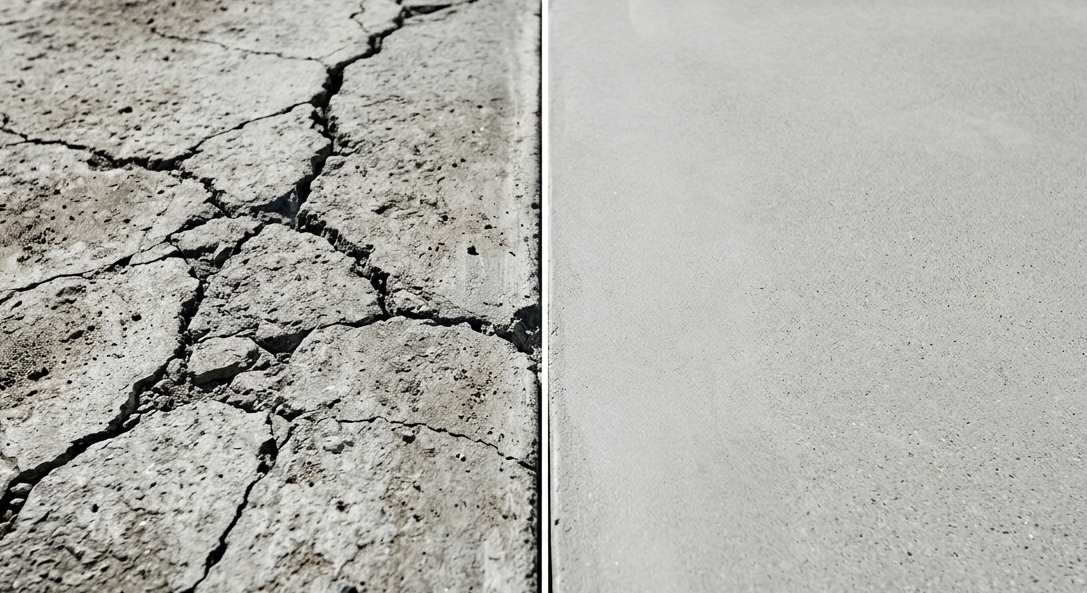
Small cracks in your concrete foundation or driveway might seem harmless, but moisture penetration can cause severe structural damage over time. Find out how professional structural bonding restores your surfaces before it’s too late.
It is tempting to ignore hairline cracks in your concrete driveway, basement floor, or warehouse slab. After all, concrete is everywhere, and small cracks seem like a normal part of aging. However, what starts as a crack as thin as a credit card can quickly escalate into a major structural problem. Concrete is naturally rigid and brittle, and once a crack forms, it becomes an open invitation for moisture. Water seeps into the crack and, when temperatures drop below freezing, it expands by nearly 9% in volume. This freezing and thawing cycle acts like a miniature hydraulic press, widening the crack with every winter. Over just two or three seasons, a hairline fracture can grow into a gap several inches wide, with spalling (surface flaking) extending outward. Worse, water traveling through cracks can erode the soil underneath the slab, creating voids that lead to settlement, sinking, or complete structural failure.
Many homeowners and facility managers attempt quick fixes with DIY crack filler or caulk from the hardware store. While these products might temporarily hide the crack cosmetically, they rarely provide true structural repair. Standard fillers sit on top of the crack or only penetrate a few millimeters, failing to bond with the internal concrete walls. Within months, seasonal movement and water pressure push the filler out, leaving the original crack exposed and often larger than before. Professional concrete repair uses an entirely different approach: structural bonding through resin injection or epoxy welding. This process involves drilling small ports along the crack, injecting a low-viscosity, high-strength epoxy resin that penetrates deep into every void, and then allowing it to cure into a bond that is actually stronger than the original concrete surrounding it. The injected resin fills the crack completely, seals against moisture, and effectively “welds” the two sides back together into a single monolithic piece.
The third critical reason to invest in professional concrete repair is proper surface preparation for any future topcoats. Whether you plan to leave the concrete exposed, apply a stain, or install an epoxy flooring system, any existing crack will telegraph through the new surface within months if not properly repaired. Professional repair ensures the substrate is stable, crack-free, and properly leveled. For industrial or commercial spaces, ignoring cracks can also lead to liability issues; trip hazards from uneven cracked floors are a leading cause of workplace injuries. The cost of professional crack injection is remarkably affordable compared to full slab replacement, which can run into the tens of thousands of dollars. If you notice cracks forming—especially those wider than 1/8 inch, actively growing, or showing vertical displacement—don’t wait. A professional assessment and structural bonding repair will restore your concrete’s integrity, prevent moisture damage, and provide a perfect foundation for any future flooring investment.