
Blog
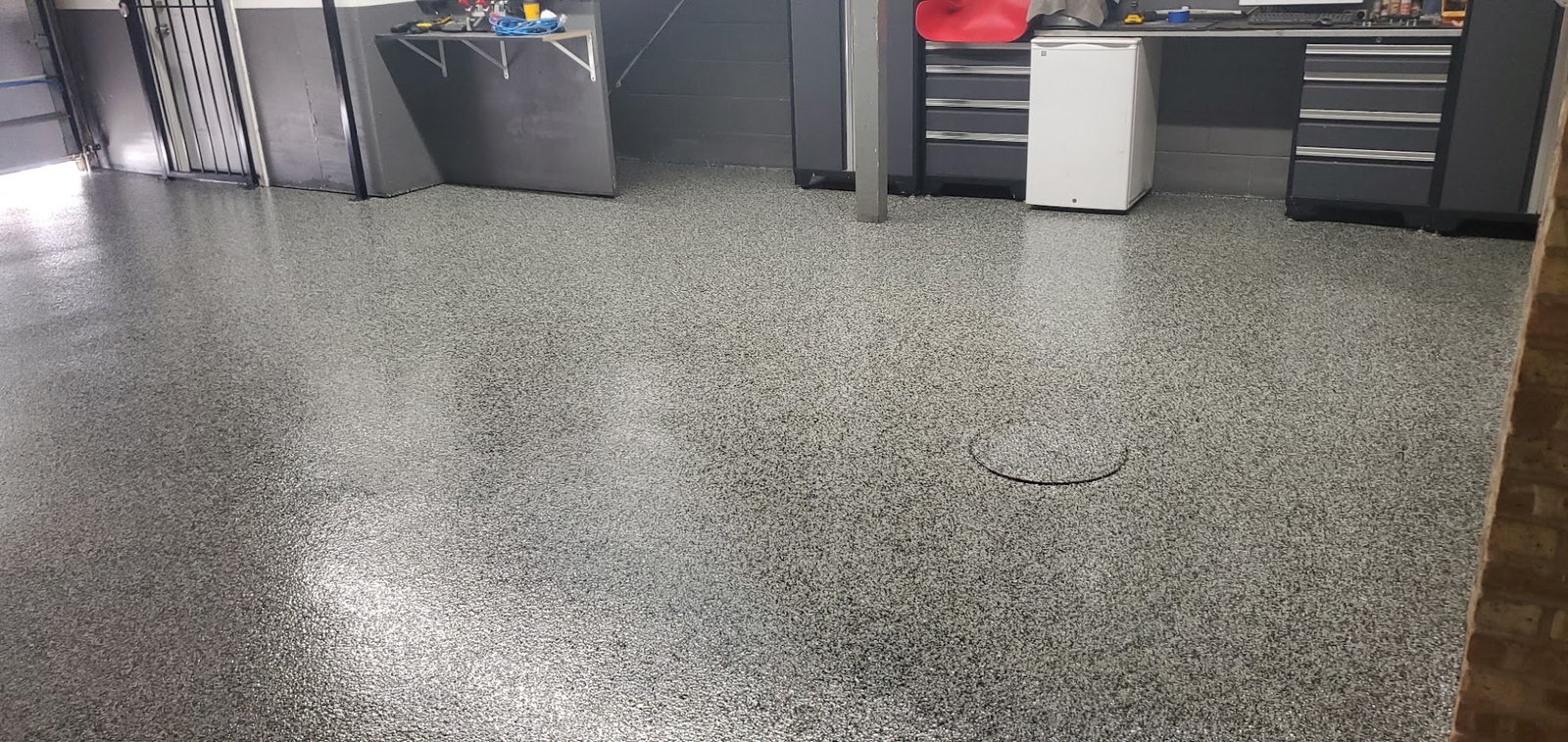
Smooth, glossy epoxy can be slippery when wet, oily or covered in melting snow. Dry epoxy is usually no more slippery than sealed concrete. Adding a flake broadcast, an anti-slip grit in the topcoat, or a satin finish makes the floor much safer, which is why we add texture to garage floors in Chicago.
It is a fair worry. A mirror-gloss floor looks great in photos, and then a Chicago winter drags snow and slush across it. Here is when epoxy gets slippery and how to make it safe.
When epoxy floors get slippery
- Water and melting snow: the most common cause in garages.
- Oil, antifreeze or grease: any liquid on a smooth surface reduces grip.
- Dust and sawdust: fine powder acts like tiny ball bearings.
- Smooth, high-gloss finishes: no texture means less traction.
A dry, clean epoxy floor is generally no more slippery than sealed concrete.
How to make an epoxy floor less slippery
Choose a flake broadcast
A full flake broadcast adds natural texture across the whole floor. It is our default for garages. See the flake epoxy floor guide.
Add an anti-slip additive
Fine grit, such as aluminum oxide, can be mixed into or broadcast over the topcoat. It adds grip you can feel without changing the look much. More grit means more traction but slightly harder cleaning, so we match the level to the space.
Pick a satin finish
Satin topcoats reduce glare and feel less slick than high gloss.
Use mats where water collects
A mat at the entry door and where the car drips helps in winter.
Slip resistance by floor type
| Floor | Wet grip | Notes |
|---|---|---|
| Smooth high-gloss epoxy | Lowest | Best reserved for dry indoor spaces |
| Metallic epoxy | Low | Add grit in the topcoat for kitchens or entries |
| Solid color with anti-slip grit | Good | Common in shops and commercial kitchens |
| Full broadcast flake | Good | Our default for garages |
| Flake plus anti-slip grit | Best | Ramps, wet areas and commercial floors |
Want a written number for your garage?
Free on-site measure and moisture test.
Commercial and wet areas
Restaurants, food plants and warehouses often need more texture than a home garage. Heavier grit or quartz broadcast systems are common there. See our commercial epoxy flooring page for options.
Keeping it safe over time
Clean spills quickly, rinse salt regularly, and avoid wax or polish products that leave a slick film. Our maintenance guide covers the right cleaners.
This article is part of our complete guide to garage floor coatings in Chicago.
- Start here: Garage Floor Epoxy, the Complete Guide
- Best Garage Floor Coating Options Compared
- How Much It Costs to Epoxy a Garage Floor
- Polyaspartic vs Epoxy
- Flake Epoxy Floors: Chips, Blends and Coverage
- Epoxy Floor Color Chart
- Epoxy Garage Floor Pros and Cons
- DIY Epoxy Garage Floor: What It Really Takes
- How Long Epoxy Takes to Cure
- Why Epoxy Floors Peel
- Are Epoxy Floors Slippery?
- How Long Epoxy Flooring Lasts
- Epoxy Floor Maintenance Guide
Frequently asked questions
Are epoxy garage floors slippery in winter?
A smooth coat can be slick with melting snow. Flake and anti-slip grit make a big difference.
Can you add anti-slip to an existing epoxy floor?
Yes. The floor can be lightly abraded and recoated with a topcoat containing anti-slip additive.
Is polyaspartic less slippery than epoxy?
Slip resistance depends more on texture than chemistry. Either can be made safer with flake or grit.
Does anti-slip make epoxy harder to clean?
Slightly. A fine grit keeps cleaning easy while still adding grip.
Epoxy, flake, metallic and polished concrete installers serving Chicagoland since 2006. Every article is written from what we see on real slabs.
Get a written number for your floor.
On-site measure and moisture test at no cost.
(773) 908-4913Request Estimate