How Much Does It Cost to Epoxy a Garage Floor?
Most Chicago-area 2-car garages cost $2,530 to $4,050 for a professionally installed flake epoxy floor. Here are real 1, 2 and 3-car prices and what moves the number.
On this page
Cost to Epoxy a Garage Floor by SizeEstimate Your Garage Floor in 30 SecondsDIY Epoxy Kit vs Professional Installation CostEpoxy Flooring Cost in Chicago Depends on Your FloorWhat Affects Epoxy Flooring Cost?Garage Epoxy Flooring in ChicagoResidential Flake Flooring for GaragesCommercial Epoxy Flooring CostCan Metallic Epoxy Be Used in a Basement?Is Epoxy Flooring Worth the Investment?Why Professional Installation MattersHow to Get an Accurate Epoxy Flooring EstimateWhy Choose F&L Epoxy Flooring?Get an Epoxy Flooring Estimate in ChicagoFAQsOn this page
Cost to Epoxy a Garage Floor by SizeEstimate Your Garage Floor in 30 SecondsDIY Epoxy Kit vs Professional Installation CostEpoxy Flooring Cost in Chicago Depends on Your FloorWhat Affects Epoxy Flooring Cost?Garage Epoxy Flooring in ChicagoResidential Flake Flooring for GaragesCommercial Epoxy Flooring CostCan Metallic Epoxy Be Used in a Basement?Is Epoxy Flooring Worth the Investment?Why Professional Installation MattersHow to Get an Accurate Epoxy Flooring EstimateWhy Choose F&L Epoxy Flooring?Get an Epoxy Flooring Estimate in ChicagoFAQsA professionally installed flake epoxy floor costs about $5.63 to $9.00 per square foot around Chicago: roughly $1,410 to $2,250 for a 1-car garage, $2,530 to $4,050 for a 2-car garage and $3,660 to $5,850 for a 3-car garage. Metallic epoxy costs more.
If you are thinking about upgrading your garage, basement, or commercial floor, one of the first questions you may have is: How much does epoxy flooring cost in Chicago? The honest answer is that there is no one price for every project. The final cost depends on the size of your floor, the condition of the concrete, the preparation it needs, and the type of flooring system you choose.
A small garage with a clean concrete surface will not require the same work as an older commercial floor with cracks, stains, or damaged areas. The finish you choose can also change the overall cost.
Understanding what goes into an epoxy flooring project can help you plan your budget and make a more informed decision.
Cost to Epoxy a Garage Floor by Size
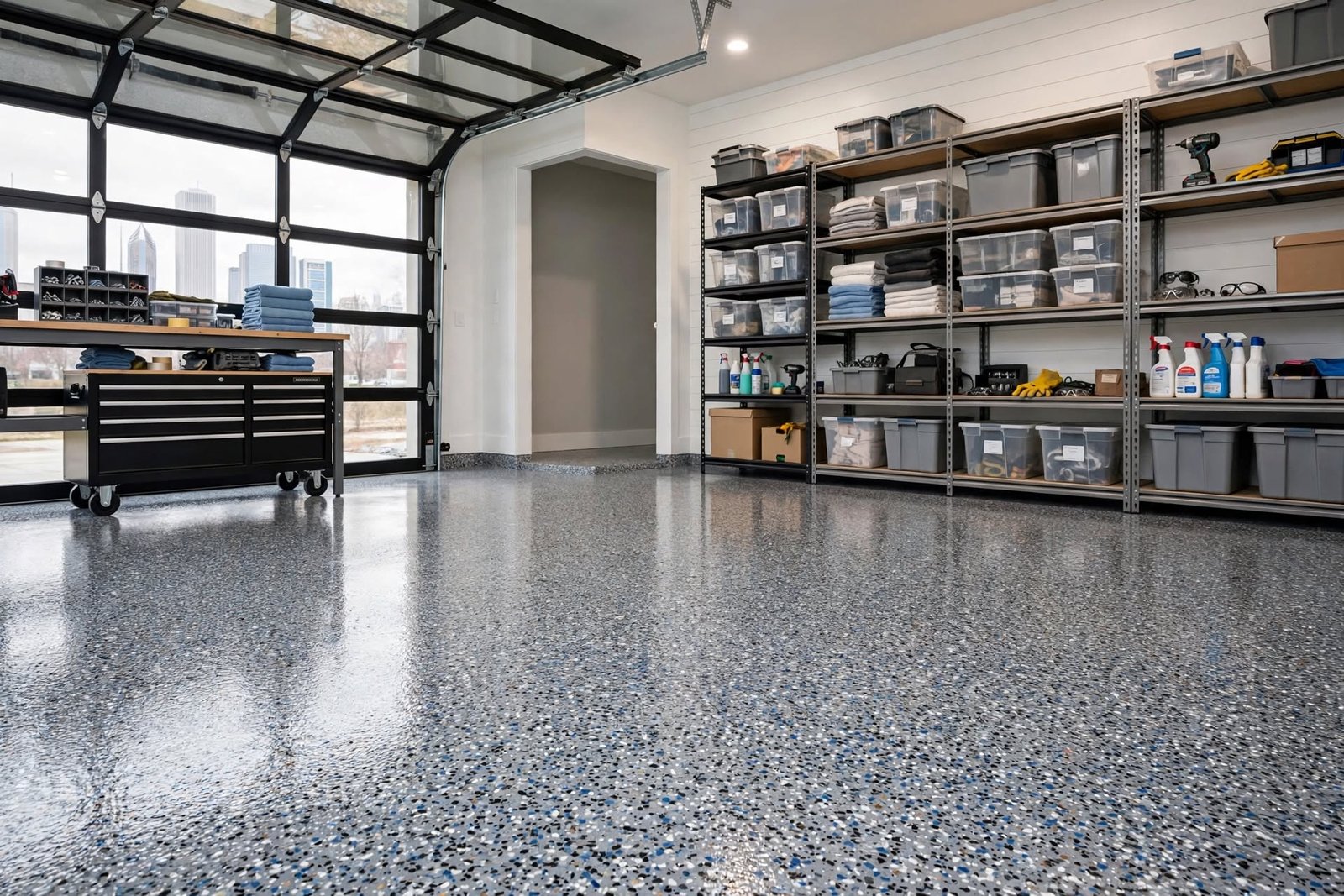
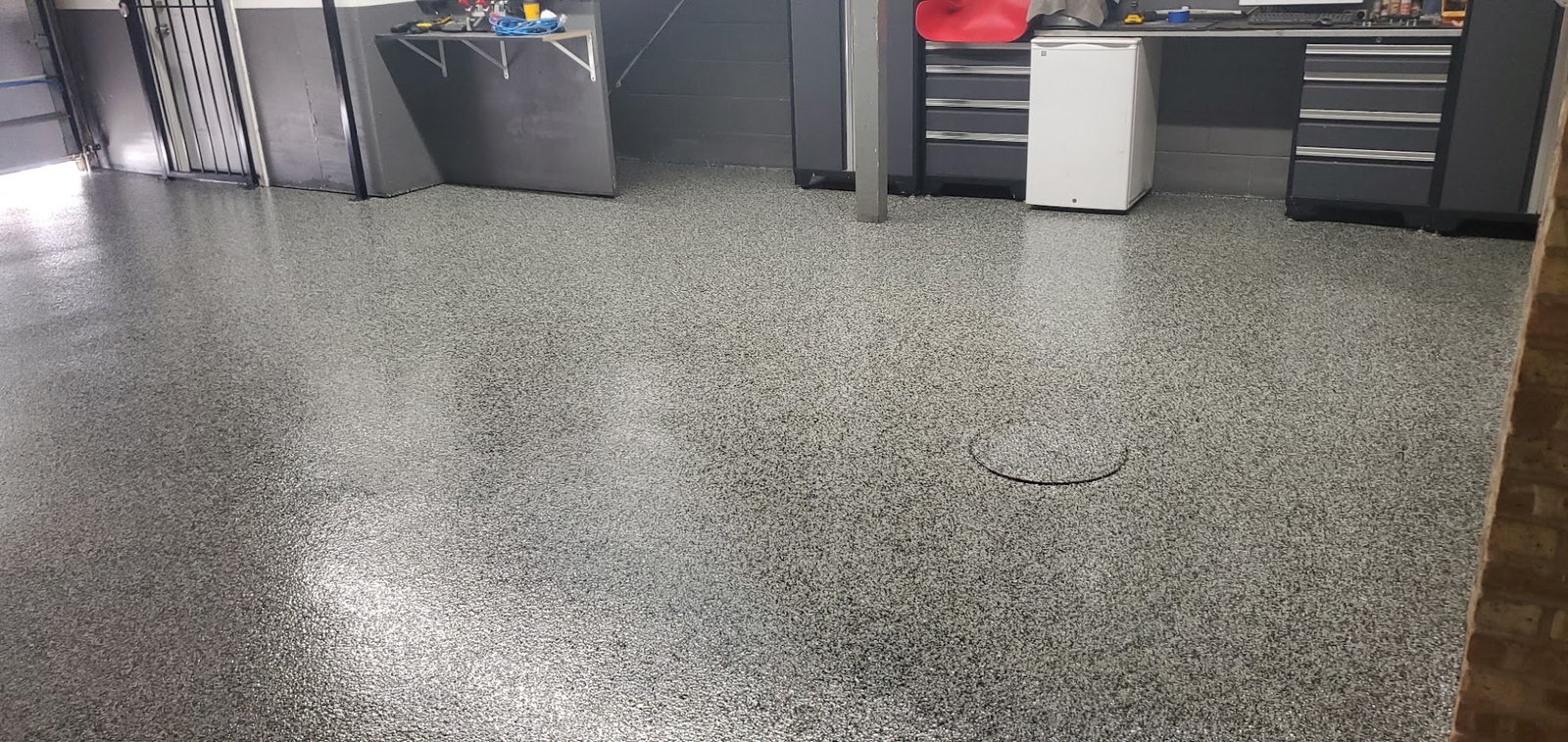
Short answer: a professionally installed flake epoxy floor in a typical Chicago-area 2-car garage costs about $2,530 to $4,050. That works out to roughly $5.63 to $9.00 per square foot, including diamond grinding, crack repair, the base coat, full flake broadcast and a clear topcoat.
| Garage size | Typical area | Flake or solid epoxy | Metallic epoxy |
|---|---|---|---|
| 1-car garage | about 250 sq ft | $1,410 to $2,250 | $2,560 to $3,500 |
| 2-car garage | about 450 sq ft | $2,530 to $4,050 | $4,610 to $6,300 |
| 3-car garage | about 650 sq ft | $3,660 to $5,850 | $6,660 to $9,100 |
The low end of each range assumes sound concrete that needs only standard grinding. The high end covers slabs with cracks, pitting, oil stains or an old coating that has to come off first. Garages vary a lot in size, so measure your floor: square footage moves the price more than anything else. See our garage floor coating service for what is included in a flake system.
Estimate Your Garage Floor in 30 Seconds
Enter your square footage, pick a system and the condition of your concrete. The range updates as you go and uses the same pricing we quote from. You can also open the full epoxy flooring cost calculator.
Planning ranges based on installed prices around Chicago. Prep and repair are 30 to 50 percent of most jobs, so your written estimate comes after a free on-site measure and moisture test.
DIY Epoxy Kit vs Professional Installation Cost
A store-bought kit costs much less up front. Most kits for a 2-car garage run roughly $150 to $1,000 in materials, depending on whether you buy a thin water-based coating or a 100% solids system. The gap shows up in prep, thickness and how long the floor lasts.
- Prep: most kits rely on acid etching or a degreaser. A professional install diamond-grinds the slab so the coating bonds into open concrete.
- Thickness: a kit usually lays down one thin coat. A full broadcast flake system builds several layers and a clear topcoat.
- Chicago winters: road salt, snowmelt and hot tires lift thin coatings first, which is why peeling DIY floors are so common here.
- Lifespan: a properly prepped flake system can last 10 to 20 years. Many DIY coatings need touch-ups within a few seasons.
Want a written number instead of a range?
We measure, test the slab and quote in one free visit.
Epoxy Flooring Cost in Chicago Depends on Your Floor
When comparing epoxy flooring prices, it is easy to focus only on the cost per square foot. While the size of the floor is important, it is only one part of the estimate.
Before an epoxy system is installed, the existing concrete needs to be evaluated. The installer needs to know what condition the floor is in, how the space will be used, and what type of finish you want.
For example, a residential garage, finished basement, and commercial garage may all need different flooring solutions.
That is why a professional estimate is more useful than choosing a flooring company based only on a general price you find online.
What Affects Epoxy Flooring Cost?
Several factors can influence the final price of an epoxy flooring project.
Floor Size
The size of the area is one of the first things considered when preparing an estimate. A larger floor generally requires more material and installation time.
However, the layout matters too. Corners, edges, entrances, columns, and areas that are difficult to access can add to the work involved.
Condition of the Concrete
The existing concrete can make a big difference in the project.
If the floor has cracks, holes, stains, old coatings, or damaged sections, those issues may need to be addressed before the epoxy system is applied.
A floor that needs very little preparation can be easier to work with than an older surface that needs extensive repairs.
This is also why proper inspection matters. You want to know what your floor needs before the installation begins rather than discovering problems after the new coating has been applied.
Surface Preparation
Good epoxy flooring starts with good preparation.
Depending on the floor, preparation may include cleaning, mechanical grinding, repairing cracks, removing old coatings, and preparing the concrete so the new flooring system can bond properly.
Preparation is not the part of the project that customers see once the job is finished, but it can have a major effect on how the finished floor performs.
Cutting corners during preparation may save money at the beginning but can create problems later.
Type of Flooring System
The flooring system you select will also affect the project cost.
Some customers want a simple, clean epoxy finish. Others prefer decorative options such as flakes or metallic finishes.
For example, Residential Flake Flooring is a popular choice for garages and other residential spaces where homeowners want a practical floor with a decorative finish.
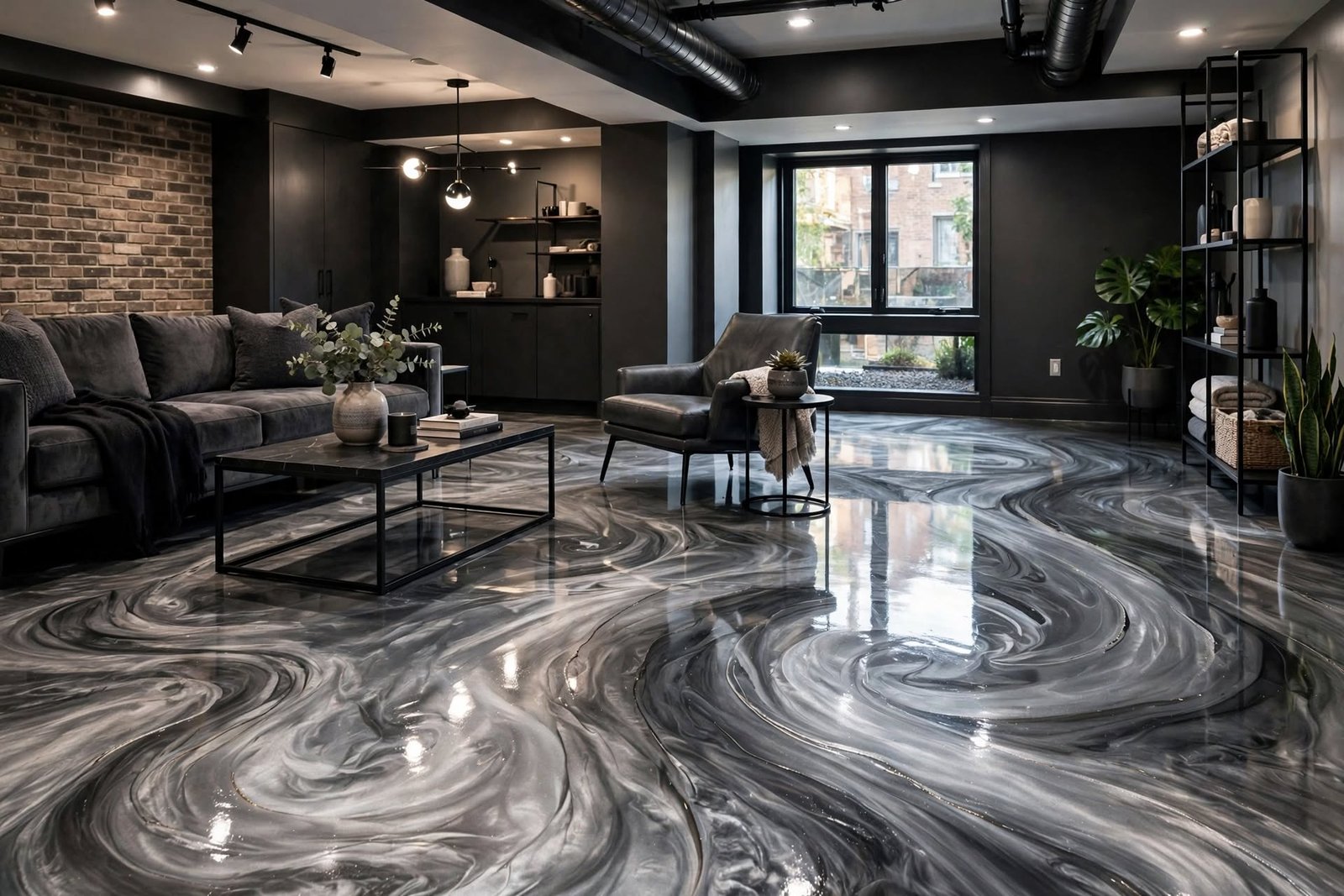
Metallic epoxy is another option for customers who want something more distinctive. It can create unique patterns and a more decorative appearance, making it suitable for spaces where the floor is part of the overall design.
Garage Epoxy Flooring in Chicago
A garage floor has to deal with more than everyday foot traffic. Vehicles, dirt, oil, moisture, dropped tools, and general wear can all take a toll on unfinished concrete.
Epoxy flooring can give a garage a smoother and more finished surface that is easier to clean and maintain.
Chicago garages can also experience changing temperatures throughout the year. This makes proper concrete preparation and choosing an appropriate flooring system important parts of the project.
The right solution also depends on how you use your garage. A garage used mainly for parking and storage may have different needs than one used as a workshop or for heavier activities.
Residential Flake Flooring for Garages
Flake flooring is a practical option for homeowners who want more than a plain floor.
Decorative flakes are added to the flooring system to create a textured and finished appearance. Different colors and combinations can be used to achieve a look that works with the rest of the garage.
Another benefit is that the decorative finish can help make everyday dirt and small imperfections less noticeable.
If you are considering this type of flooring, the existing concrete should still be inspected and prepared properly before installation.
Commercial Epoxy Flooring Cost
Commercial flooring projects can be more complicated than residential projects because businesses often have different flooring demands.
A commercial garage, warehouse, workshop, retail space, or other business facility may deal with heavier traffic, equipment, vehicles, or frequent cleaning.
For this reason, Commercial Garage Flooring should be selected based on how the space will actually be used.
Some of the factors that may affect commercial project costs include:
- Total floor area
- Condition of the concrete
- Surface preparation
- Type of flooring system
- Traffic levels
- Equipment and vehicles
- Desired appearance
- Access to the work area
A business owner should look beyond the lowest initial price. A flooring system needs to be suitable for the demands of the space and installed correctly.
Can Metallic Epoxy Be Used in a Basement?
Yes. Metallic epoxy can be an option for a basement when the concrete is suitable and the floor is properly prepared.
Basements are different from garages and commercial spaces, so moisture and the condition of the concrete should be considered before choosing a flooring system.
Metallic epoxy is often selected because of its decorative appearance. Instead of looking like a basic concrete coating, it can create flowing patterns and a customized finish.
If appearance is important to your basement project, metallic epoxy can be worth considering alongside other flooring options.
Is Epoxy Flooring Worth the Investment?
For many homeowners and businesses, epoxy flooring can be a worthwhile investment.
One of the biggest advantages is that it can turn an ordinary concrete floor into a more finished and usable surface. It can also make routine cleaning easier and help protect the underlying concrete from everyday use.
For a homeowner, that may mean a garage that looks cleaner and feels more organized. For a business, a professional floor can improve the appearance of the workspace while providing a surface designed for regular use.
The key is choosing a flooring system that actually fits your space. More expensive does not automatically mean better, and the cheapest option is not always the best value.
Why Professional Installation Matters
Epoxy flooring may look simple after it is finished, but getting a good result takes more than applying a coating to concrete.
The surface needs to be prepared correctly. The appropriate materials need to be selected. The coating needs to be applied under suitable conditions and according to the requirements of the flooring system.
Poor preparation can contribute to problems such as weak adhesion, peeling, uneven coverage, or premature wear.
A professional flooring company can inspect the existing floor, explain what preparation is required, and recommend a system based on the way you plan to use the space.
How to Get an Accurate Epoxy Flooring Estimate
If you want to know the actual epoxy flooring cost in Chicago for your project, the best place to start is with an evaluation of your existing floor.
A professional estimate should consider:
- The total floor size.
- The condition of the concrete.
- Repairs and preparation that may be required.
- The type of flooring system.
- How the space will be used.
- The finish and appearance you want.
- Any special requirements of the property.
It is also worth asking what is included in the estimate. Make sure you understand whether preparation, repairs, materials, installation, and finishing work are included.
This makes it much easier to compare estimates from different contractors.
Why Choose F&L Epoxy Flooring?
Every epoxy flooring project is different. The right solution depends on the floor, the property, and what you expect from the finished surface.
F&L Epoxy Flooring provides flooring solutions for residential and commercial applications, including garage flooring, residential flake flooring, metallic epoxy, and commercial flooring.
Instead of choosing a system simply because it looks good in a picture or has a low advertised price, it makes sense to consider how the floor will be used and what the existing concrete requires.
A professional evaluation can help you choose a flooring system that makes sense for your particular project.
Get an Epoxy Flooring Estimate in Chicago
The epoxy flooring cost in Chicago depends on your specific floor and the type of result you want. Size, concrete condition, preparation, flooring system, and the way the space will be used can all affect the final project cost.
Whether you are upgrading a garage, finishing a basement, or improving a commercial property, taking the time to choose the right flooring system can make a big difference.
If you are planning an epoxy flooring project in Chicago, reach out to F&L Epoxy Flooring to discuss your project and find out which flooring option may be right for your space.
This article is part of our complete guide to garage floor coatings in Chicago.
- Start here: Garage Floor Epoxy, the Complete Guide
- Best Garage Floor Coating Options Compared
- How Much It Costs to Epoxy a Garage Floor
- Polyaspartic vs Epoxy
- Flake Epoxy Floors: Chips, Blends and Coverage
- Epoxy Floor Color Chart
- Epoxy Garage Floor Pros and Cons
- DIY Epoxy Garage Floor: What It Really Takes
- How Long Epoxy Takes to Cure
- Why Epoxy Floors Peel
- Are Epoxy Floors Slippery?
- How Long Epoxy Flooring Lasts
- Epoxy Floor Maintenance Guide
Frequently asked questions
How much does it cost to epoxy a 2-car garage floor?
Around Chicago, a 2-car garage of about 450 square feet usually costs $2,530 to $4,050 for flake or solid epoxy and $4,610 to $6,300 for metallic epoxy. A larger 2-car garage near 576 square feet lands closer to $3,240 to $5,180 for flake.
Is it cheaper to epoxy a garage floor yourself?
Yes, in materials. A kit can cost a few hundred dollars, while a professional flake floor costs a few thousand. The trade-off is prep and durability: without diamond grinding, thin kit coatings often peel under hot tires and winter salt, and fixing a failed coating costs more than doing it right the first time.
What is the epoxy flooring cost in Chicago?
There is no fixed price for every Chicago project. The total cost can vary depending on floor size, concrete condition, preparation, flooring system, finish, and installation requirements.
Does the condition of concrete affect epoxy flooring cost?
Yes. Cracks, holes, stains, old coatings, and other problems may require additional preparation before the new flooring system can be installed.
Is epoxy flooring good for a Chicago garage?
Epoxy can be a good option for many garages because it creates a finished surface that is easier to clean and maintain. The appropriate system depends on the condition and use of the garage.
Is flake flooring different from regular epoxy?
Flake flooring includes decorative flakes as part of the flooring system. It can provide additional visual interest and is commonly used in residential garages and other spaces.
Can metallic epoxy be installed in a basement?
Metallic epoxy can be used in suitable basement applications. The concrete and moisture conditions should be evaluated before installation to determine whether it is the right choice.
What should I ask before hiring an epoxy flooring contractor?
Ask about concrete preparation, the flooring system being recommended, what is included in the estimate, installation process, and any warranty or project-specific details. A clear estimate should explain what you are paying for.
Epoxy, flake, metallic and polished concrete installers serving Chicagoland since 2006. Every article is written from what we see on real slabs.
Get a written number for your floor.
On-site measure and moisture test at no cost.
(773) 908-4913Request Estimate