Blog
The best basement flooring options are the ones that tolerate moisture: epoxy or polyaspartic coatings, polished or stained concrete, luxury vinyl plank and ceramic or porcelain tile. Carpet and solid hardwood are the riskiest below grade. Whatever you choose, test the slab for moisture first, because moisture is what ruins basement floors.
Basements are the hardest room in a Chicago home to floor. The slab sits below grade, groundwater pushes moisture up through the concrete, and a single heavy rain can test any floor you put down. The right choice depends on how dry your slab is, how you use the space and how it should look.
Start with moisture, not looks
Before choosing any floor, find out how much moisture is coming through the slab. Tape a square of plastic to the floor for a couple of days as a quick check; condensation under it means moisture is moving. A professional test gives a real number. Floors fail from below far more often than from wear on top.
Basement flooring options compared
| Option | Moisture tolerance | Typical feel | Best for |
|---|---|---|---|
| Epoxy or polyaspartic coating | High with proper primer | Seamless, hard, easy to clean | Rec rooms, gyms, laundry, storage |
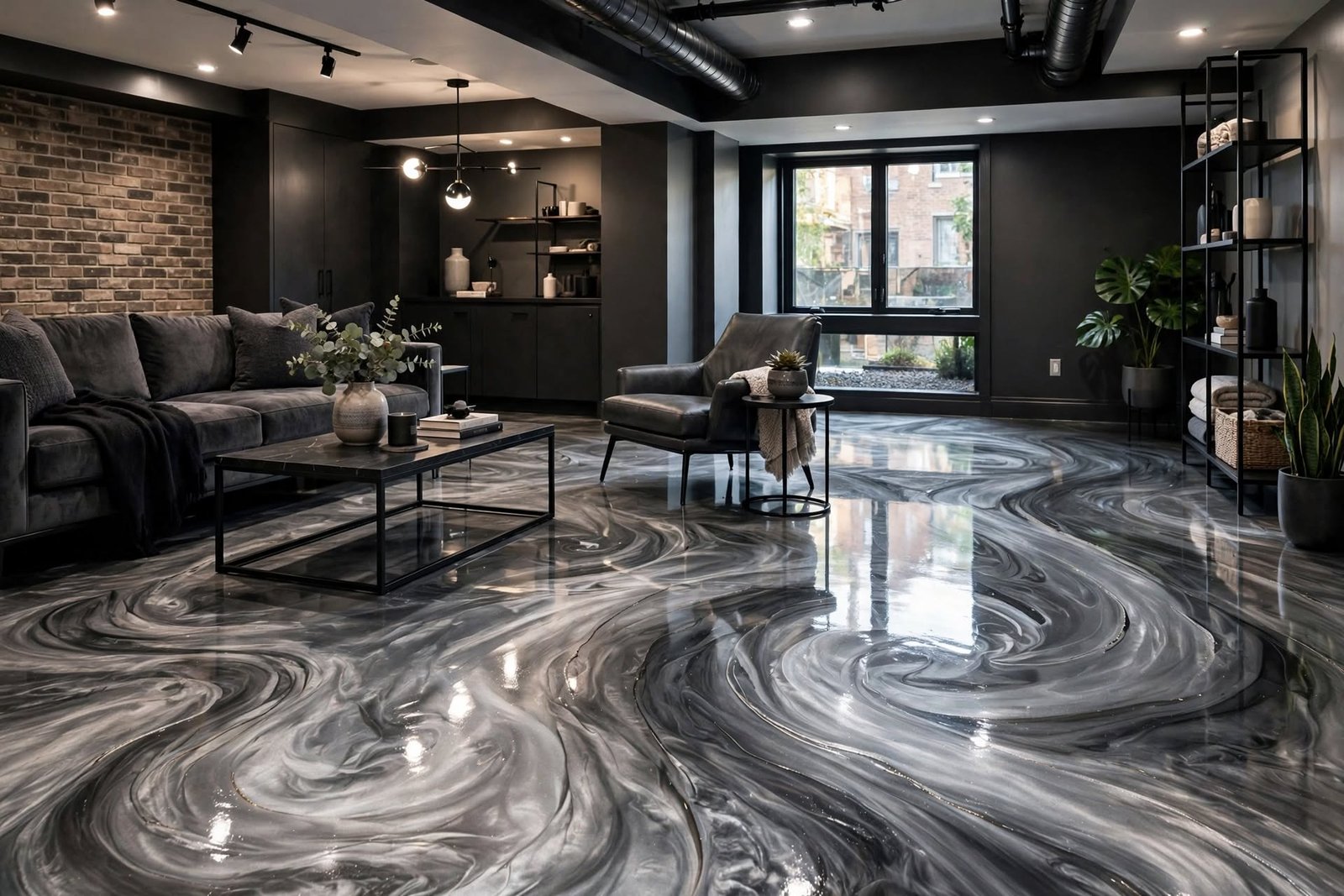
| Metallic epoxy | High with proper primer | High-end, glossy, one of a kind | Bars, media rooms, showpiece spaces |
| Polished or stained concrete | High | Hard, modern, low maintenance | Modern finishes, dry slabs in good shape |
| Luxury vinyl plank | High (waterproof core) | Warmer, wood look | Family rooms, bedrooms |
| Porcelain or ceramic tile | High | Hard, cold, grout lines | Bathrooms, entries |
| Carpet | Low | Soft and warm | Only very dry basements |
| Solid hardwood | Very low | Warm, natural | Not recommended below grade |
Epoxy and polyaspartic coatings
A coating bonds directly to the slab, so there is nothing for mold to grow under and no seams for water to sit in. Solid colors, flake blends and metallic finishes are all options. With a moisture-mitigating primer, coatings handle damp slabs better than most floors. Read our full basement epoxy floor guide.
Want a written number for your garage?
Free on-site measure and moisture test.
Polished and stained concrete
If the slab is in good condition, polishing or staining it turns the concrete itself into the finished floor. It is durable and breathable, but it shows existing cracks and patches. See polished concrete vs epoxy for how the two compare.
Luxury vinyl plank
Vinyl plank with a waterproof core is a popular choice for finished family rooms. It feels warmer underfoot and looks like wood. The weak point is that moisture can collect under a floating floor, so a vapor barrier and a dry slab still matter.
Tile
Porcelain tile is very water resistant and a good fit for basement bathrooms. It is cold and hard, and grout lines need sealing and cleaning.
Carpet and hardwood
Carpet traps moisture and can grow mold after a single leak. Solid hardwood swells and cups. If you want the look of wood below grade, vinyl plank is the safer route.
What basement flooring costs
Coatings in the Chicago area typically run about $4.50 to $9 per square foot for solid or flake systems and about $9 to $14 for metallic, depending on slab condition. Our cost calculator gives a fast range, and the Chicago cost guide breaks it down.
How to choose
- Damp slab or past water issues: a coating with moisture primer, or vinyl plank over a vapor barrier.
- Heavy use, gym or workshop: epoxy or polyaspartic.
- Showpiece space: metallic epoxy; see basement floor ideas.
- Cozy bedroom or family room: vinyl plank with area rugs.
This article is part of our complete guide to basement floors in Chicago homes.
Frequently asked questions
What is the best flooring for a basement?
For most Chicago basements, a moisture-tolerant floor such as an epoxy coating, polished concrete or waterproof vinyl plank is the best choice.
What flooring should you avoid in a basement?
Solid hardwood and wall-to-wall carpet are the riskiest because they absorb moisture.
Do I need to test my basement floor for moisture?
Yes. Moisture is the most common cause of basement floor failure, so testing comes first.
Is epoxy good for a basement floor?
Yes, when the slab is prepped and a moisture-mitigating primer is used where needed.
Epoxy, flake, metallic and polished concrete installers serving Chicagoland since 2006. Every article is written from what we see on real slabs.
Get a written number for your floor.
On-site measure and moisture test at no cost.
(773) 908-4913Request Estimate