
Epoxy Garage Floor Peeling: Why It Happens and What Actually Fixes It

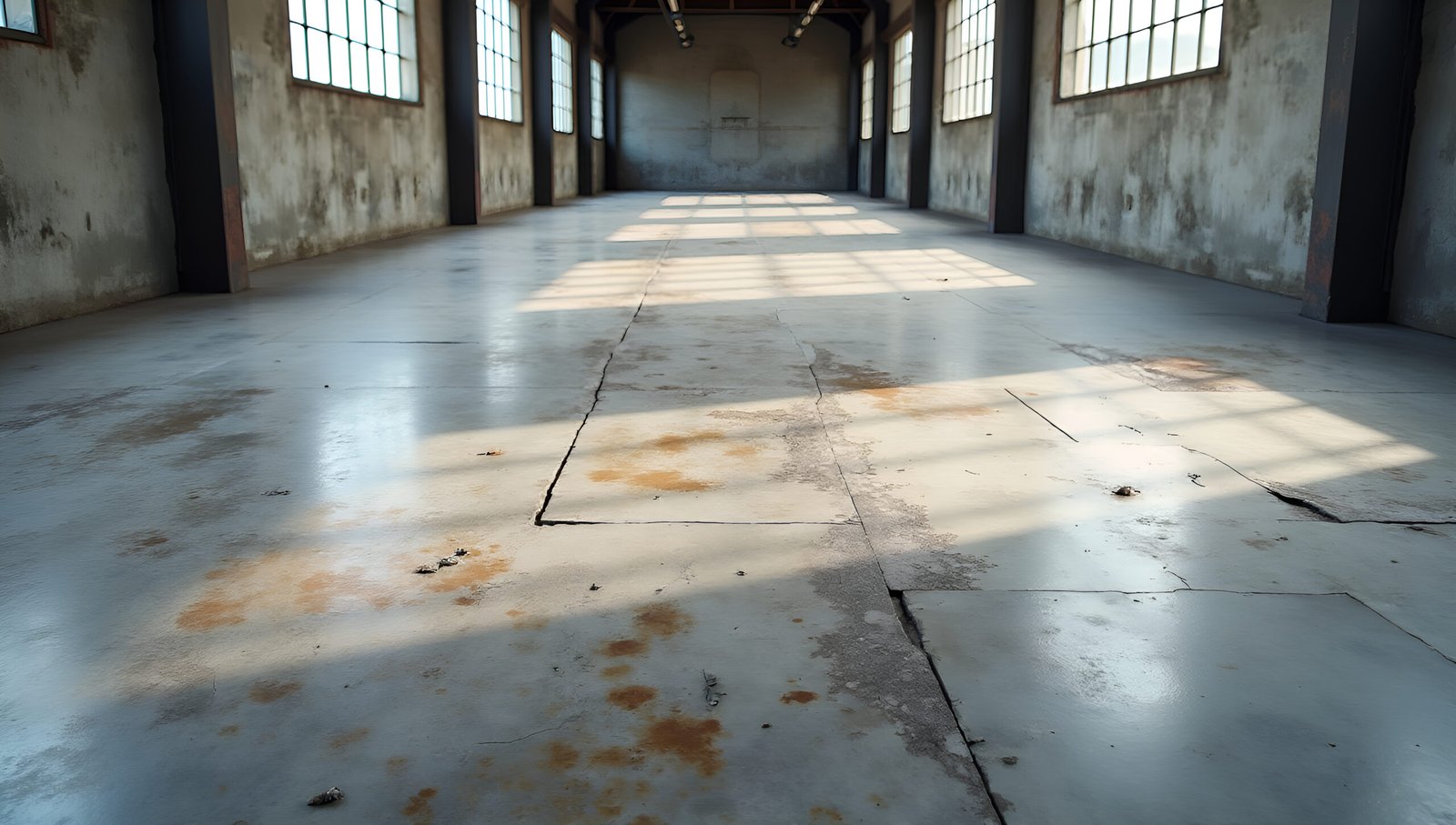
Almost every week we get a call about epoxy garage floor peeling. It usually starts the same way: “I coated my garage a year ago and now it’s coming up.” Sometimes it’s a DIY kit from the hardware store. Sometimes someone paid a crew who got it done in a day and was gone by dinner. If you’re thinking about a proper garage floor coating the second time around, it helps to know what went wrong the first time.
It Usually Starts With the Concrete
Here’s the part nobody likes hearing. Epoxy doesn’t stick to dirty, smooth, or damp concrete. It sticks to clean, rough, dry concrete, and getting a slab to that point takes real work.
The DIY kits tell you to acid etch. We’ve seen what that does, and it’s not much. It roughens the top a little but leaves the surface far too smooth for a coating to really grip. A diamond grinder is what you actually need. It opens up the concrete so the epoxy can sink in and hold on. It’s loud, dusty, and slow, which is exactly why plenty of people skip it.
If your floor was etched instead of ground, that’s likely your answer.
Then There’s the Water You Can’t See
Concrete breathes. Moisture moves up through the slab all the time, even when the floor feels bone dry. Put a coating over it without checking, and that vapor gets trapped. Eventually it wins, and you get bubbles, blisters, or sheets of coating lifting off in one piece.
If you see bubbles across the whole floor and not just in one corner, think moisture first.
Why Epoxy Garage Floor Peeling Starts Under the Tires
Hot tires. You drive home, park, and the rubber is still warm. A weak coating softens a little under that heat, and when you pull out the next day, it can take a bit of the floor with it. Do that for a winter and you’ve got two bare patches shaped exactly like your tires.
Oil is the other sneaky one. If an old stain wasn’t fully pulled out of the concrete, the coating bonds to the grease instead of the slab. It looks fine until it doesn’t.
Chicago Winters Make Everything Worse
Salt and slush ride in on your tires every day from December through March. That water melts off, sits in a low spot, finds one tiny gap in the coating, and gets underneath. Then it freezes overnight and pries the edge up a little more. Do that a few dozen times and a small flaw turns into a big one.
A well-bonded floor keeps all of that on top, where you can squeegee it out. A poorly bonded one gives it a way in.
Can You Patch Epoxy Garage Floor Peeling?
If it’s one small chip near the door, maybe. Honestly, a patch on a floor that’s peeling under the tires or bubbling across the middle is just a short-term fix. The bond underneath has already failed, so it will keep spreading.
And please don’t coat right over the old stuff. The new coat is only as good as what it’s sitting on, and a loose layer underneath will drag it down with it.
What Fixing It the Right Way Looks Like
It isn’t complicated, just thorough. The old coating comes off. The slab gets diamond-ground until it’s clean and rough. Cracks get repaired, not just filled and smoothed over. We check moisture before choosing a system. Then comes an epoxy base with flake, and a polyaspartic top coat that handles tires, UV and chemicals much better than epoxy alone.
That’s how we do every garage at F&L, and it’s the reason we’d rather take an extra day on prep than rush the coating. If you want to see what that includes, take a look at our garage floor coating and crack repair pages.
What Will a Redo Cost?
A bit more than coating a fresh slab, since the old layer has to be removed first. For most Chicago-area garages, flake epoxy runs roughly $4.50 to $9 per square foot installed, and a standard two-car garage often lands around $3,000 to $4,500. Removal and repairs get added once we see the floor in person. If you want a rough idea first, the cost calculator will get you close, and the cost guide explains what moves the number.
Before You Hire Anyone, Ask These
Do you grind or acid etch? Do you test for moisture? What goes on top of the epoxy? What does your warranty actually cover, and can I get it in writing?
A good installer answers those without hesitating. If you get a vague answer, keep looking.
And once the new floor is down, rinse the salt off it now and then through the winter. Nothing fancy. Our maintenance guide walks through it.
Quick Answers
Why is my epoxy peeling only under the tires?
Hot tire pickup on a coating that never bonded well, usually because the concrete was etched instead of ground.
Can I recoat over peeling epoxy?
No. The old layer has to come off first, or the new one will fail the same way.
How long should a garage floor coating last?
A properly prepped flake system commonly lasts 10 to 20 years with normal care.
Does a warranty cover peeling?
It depends on the company, so get the terms in writing before you sign anything.
Not Sure If Your Floor Can Be Saved?
We’ll come out, look at the floor, and tell you straight whether it needs a repair or a full redo. If it’s something small, we’ll say so.
Request a free estimate or call (773) 908-4913. We cover Chicago and DuPage County, including Naperville, Downers Grove, Addison, Lombard, Schaumburg, Wheaton, Elmhurst and Oak Brook.