Blog
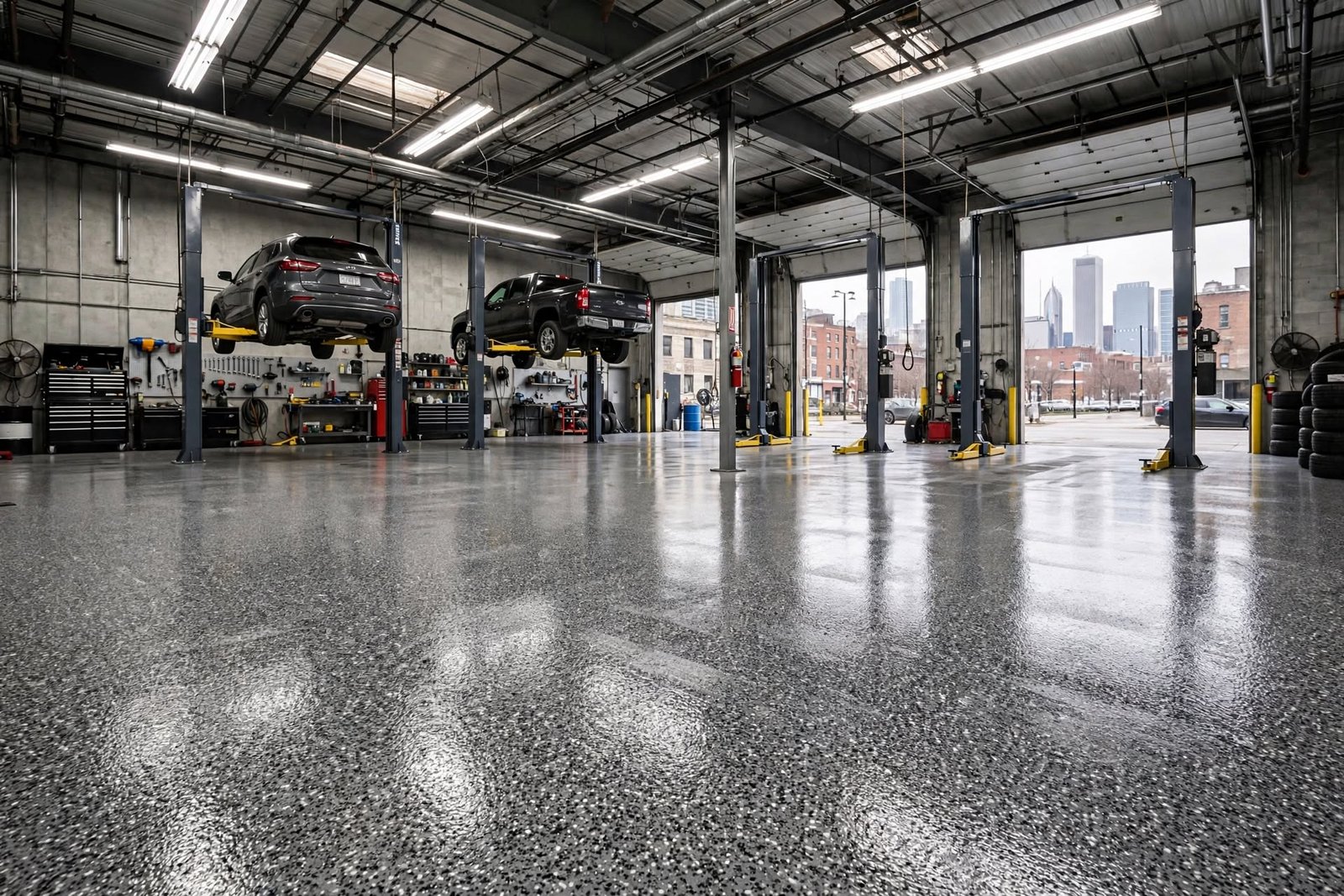
The best restaurant kitchen flooring is seamless, slip resistant, easy to sanitize and tolerant of hot water, grease and cleaning chemicals. Textured urethane cement and quartz broadcast epoxy systems are common choices, along with quarry tile. Integral cove base and proper slope to drains matter as much as the coating itself.
A restaurant kitchen floor takes more abuse than almost any other floor: boiling water, grease, sanitizers, dropped pans, constant wet mopping and staff moving fast. It also has to pass health inspections. Choosing the right system saves years of grout repairs and slip incidents.
What a kitchen floor needs
- Slip resistance when wet and greasy.
- Seamless, nonporous surface for sanitation.
- Heat and thermal shock tolerance near fryers, kettles and dish areas.
- Chemical resistance to degreasers and sanitizers.
- Integral cove base so the floor curves up the wall with no seam.
- Fast installation to limit lost service days.
Kitchen flooring options compared
| Option | Strengths | Watch-outs |
|---|---|---|
| Urethane cement | Excellent heat, thermal shock and moisture tolerance | Matte look, fewer color options |
| Quartz broadcast epoxy | Seamless, very slip resistant, decorative colors | Standard epoxy is less heat tolerant near fryers |
| Quarry tile | Traditional, heat tolerant | Grout lines crack and harbor bacteria |
| Sealed or polished concrete | Low cost | Slick when greasy, stains easily |
| Vinyl or VCT | Cheap to install | Seams lift with water; not for wet cook lines |
Why seamless beats tile
Quarry tile is heat tolerant, but grout joints wear, crack and hold bacteria and water. A seamless resin floor with integral cove base removes those joints entirely, which makes cleaning faster and inspections easier.
Want a written number for your garage?
Free on-site measure and moisture test.
Texture and slip resistance
Kitchens need more texture than homes. Quartz or aluminum oxide broadcast gives grip even with grease on the floor. We balance texture with cleanability. See are epoxy floors slippery.
Drains and slope
Water should run to floor drains, not pool. Resin systems can be built up to improve slope around drains during installation.
Minimizing downtime
Many kitchen floors can be installed over a closed day or a weekend using fast-curing systems. Old tile removal and moisture in the slab affect the schedule, so we assess the site first. See how long epoxy takes to cure.
Front of house
Dining rooms and bars can use metallic or flake finishes for a decorative look that still cleans easily. See floor ideas and metallic epoxy.
This article is part of our complete guide to commercial and industrial floors.
Frequently asked questions
What is the best flooring for a restaurant kitchen?
Seamless textured resin floors, such as urethane cement or quartz broadcast systems, are among the most durable and sanitary choices.
Is epoxy good for commercial kitchens?
Yes, with texture for slip resistance. Near high heat, urethane cement is often the better choice.
How long does it take to install a kitchen floor?
Many are done over one to three days, depending on removal, size and system.
Why is cove base important?
It removes the seam between floor and wall where dirt and water collect, which helps sanitation.
Epoxy, flake, metallic and polished concrete installers serving Chicagoland since 2006. Every article is written from what we see on real slabs.
Get a written number for your floor.
On-site measure and moisture test at no cost.
(773) 908-4913Request Estimate