Blog
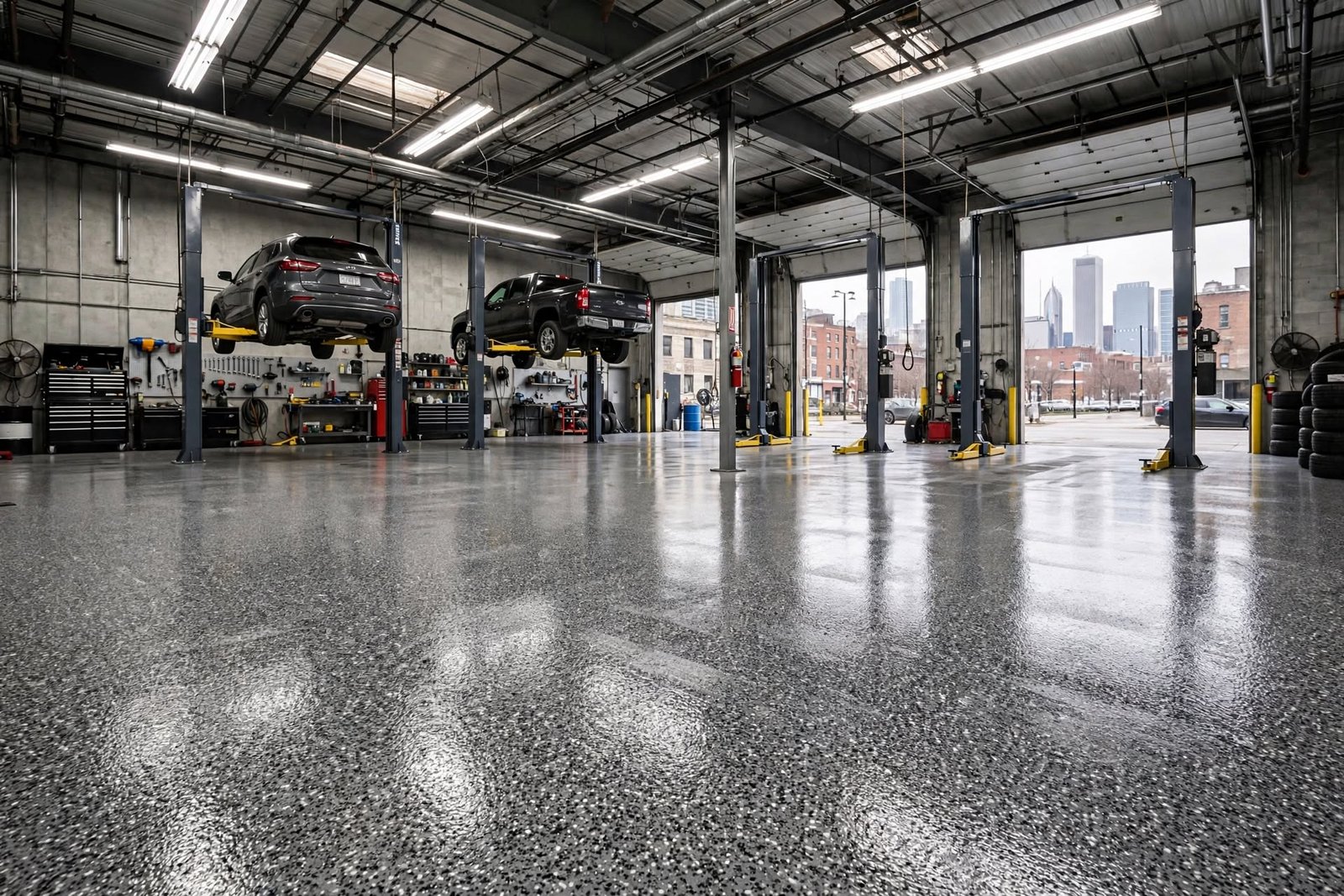
Commercial epoxy flooring is a resin coating system built for heavy traffic, forklifts, chemicals and frequent cleaning. Common systems include high-build epoxy, flake, quartz and polyaspartic, plus polished concrete as an alternative. The right choice depends on traffic, chemicals, slip risk, and how much downtime your business can take.
A commercial floor is equipment. It has to carry pallet jacks and forklifts, handle spills and cleaning chemicals, meet safety expectations and go down with as little disruption as possible. Here is how we help Chicago businesses choose.
Where commercial epoxy is used
- Warehouses and distribution centers
- Auto shops, dealerships and service bays
- Restaurants and commercial kitchens
- Retail showrooms and offices
- Light manufacturing and food production
- Gyms, schools and healthcare back-of-house
Commercial floor systems compared
| System | Strengths | Best for |
|---|---|---|
| High-build epoxy | Thick, impact and chemical resistant | Warehouses, manufacturing |
| Flake epoxy or polyaspartic | Textured, hides wear, fast return to service with polyaspartic | Service bays, showrooms, locker rooms |
| Quartz broadcast | Very high slip resistance and durability | Kitchens, wet areas, ramps |
| Metallic epoxy | Distinctive decorative finish | Retail, lobbies, restaurants front of house |
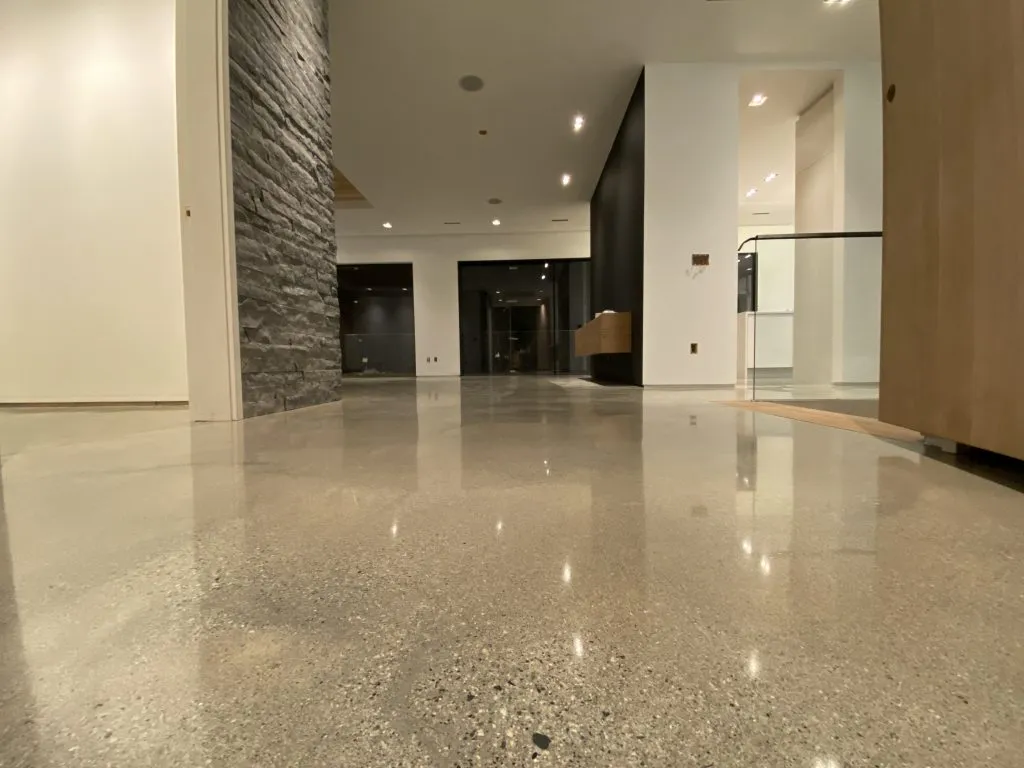
| Polished concrete | No coating to wear off, very low upkeep | Big box retail, warehouses with dry use |
For the full comparison, read polished concrete vs epoxy.
What drives commercial epoxy cost
- Square footage: larger areas usually lower the per-foot price.
- Slab condition: cracks, joints, old coatings and oil contamination add prep.
- System thickness: high-build and quartz systems use more material.
- Moisture: mitigation primers add cost but prevent failures.
- Schedule: night, weekend or phased installs cost more but keep you open.
Our Chicago cost guide and polished concrete cost guide give typical ranges. Commercial jobs are always quoted after a site visit.
Want a written number for your garage?
Free on-site measure and moisture test.
Planning around downtime
Fast-curing polyaspartic topcoats can return a floor to foot traffic in hours and to vehicles in about a day, depending on conditions. Large spaces can be done in phases so part of the building stays open. See how long epoxy takes to cure.
Safety and slip resistance
Wet areas, ramps and kitchens need texture. Quartz or grit additives raise slip resistance, and line striping marks walkways and forklift lanes. More in are epoxy floors slippery.
Prep is the same, only bigger
Commercial floors are diamond ground with dust collection, joints and cracks are filled, and contaminated concrete is removed. That prep is what keeps a floor bonded under forklift traffic. Learn about concrete grinding.
Maintenance
Auto scrubbers with a neutral cleaner, prompt spill cleanup and periodic topcoat renewal in high-traffic lanes keep a commercial floor looking new. See the maintenance guide.
This article is part of our complete guide to commercial and industrial floors.
Frequently asked questions
How long does commercial epoxy flooring last?
It depends on traffic and system thickness. High-build systems in well-maintained facilities often last many years, and topcoats can be renewed without a full redo.
Can you install epoxy while the business stays open?
Often yes, by phasing the work, working nights or weekends and using fast-curing topcoats.
Is epoxy good for forklift traffic?
Yes. High-build epoxy over properly ground concrete is a common warehouse floor.
What is the best floor for a commercial kitchen?
Textured quartz or urethane cement systems are common. See our restaurant kitchen flooring guide.
Epoxy, flake, metallic and polished concrete installers serving Chicagoland since 2006. Every article is written from what we see on real slabs.
Get a written number for your floor.
On-site measure and moisture test at no cost.
(773) 908-4913Request Estimate