Blog
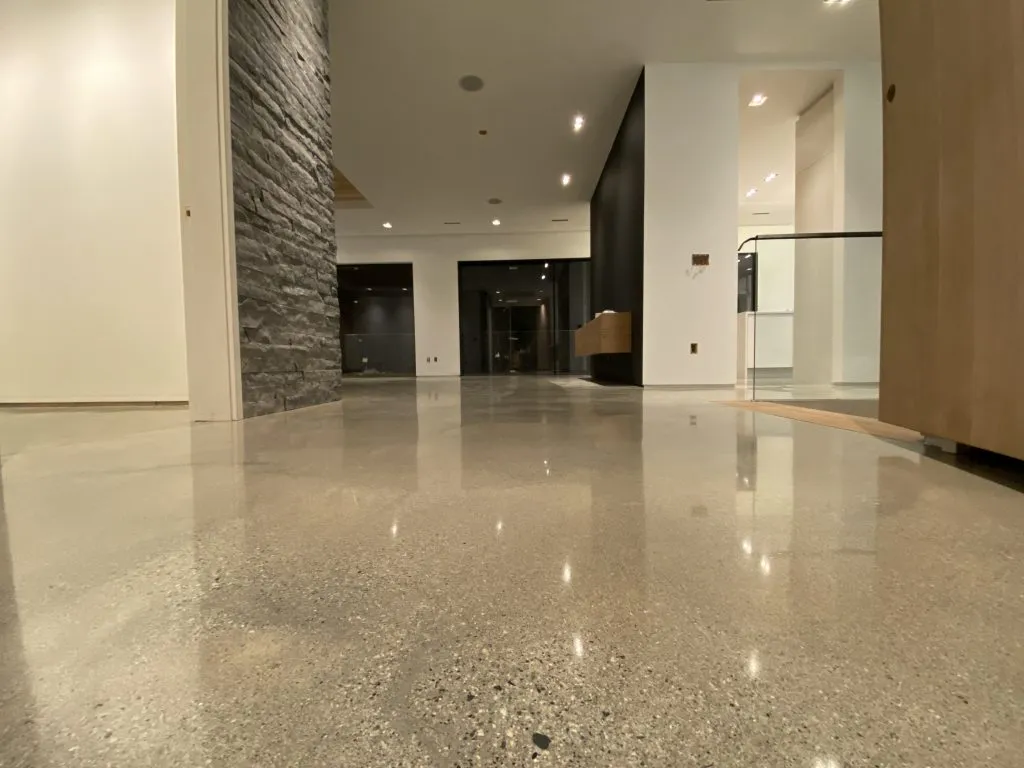
Polished concrete refines the slab itself, so there is no coating to peel and upkeep is very low, but it shows existing cracks and stains. Epoxy adds a coating on top, which hides flaws, adds color and resists chemicals and salt better, but it can wear in traffic lanes over time. Garages and kitchens usually suit epoxy; big dry spaces often suit polished concrete.
Both floors start with diamond grinding. After that, they go in opposite directions. Polished concrete keeps grinding with finer and finer diamonds and densifies the slab until it shines. Epoxy stops grinding early and bonds a resin coating on top.
Side-by-side comparison
| Factor | Polished concrete | Epoxy |
|---|---|---|
| Typical Chicago cost | About $5 to $8 per sq ft | About $4.50 to $9 per sq ft (solid or flake) |
| Durability | Very high; nothing to peel | High; topcoat can wear in heavy lanes |
| Hides slab flaws | No; cracks and patches show | Yes; covers stains and patches |
| Chemical and salt resistance | Moderate; needs a guard | High |
| Color options | Natural gray, dyes, aggregate exposure | Nearly unlimited, flake and metallic |
| Slip resistance | Good when dry; can be slick when wet | Adjustable with flake or grit |
| Moisture tolerance | High; slab breathes | Needs testing and primer on damp slabs |
| Maintenance | Dust mop, auto scrub, occasional burnishing | Dust mop, neutral cleaner, periodic recoat |
When polished concrete wins
- Large, dry commercial spaces like retail and warehouses.
- Slabs in good condition with few patches.
- Owners who want the lowest long-term upkeep.
- Damp slabs where a coating would struggle.
When epoxy wins
- Garages exposed to road salt and hot tires.
- Kitchens, labs and shops with chemicals.
- Stained, patched or uneven slabs that need covering.
- Spaces that need color, flake, metallic or safety striping.
Want a written number for your garage?
Free on-site measure and moisture test.
What about garages?
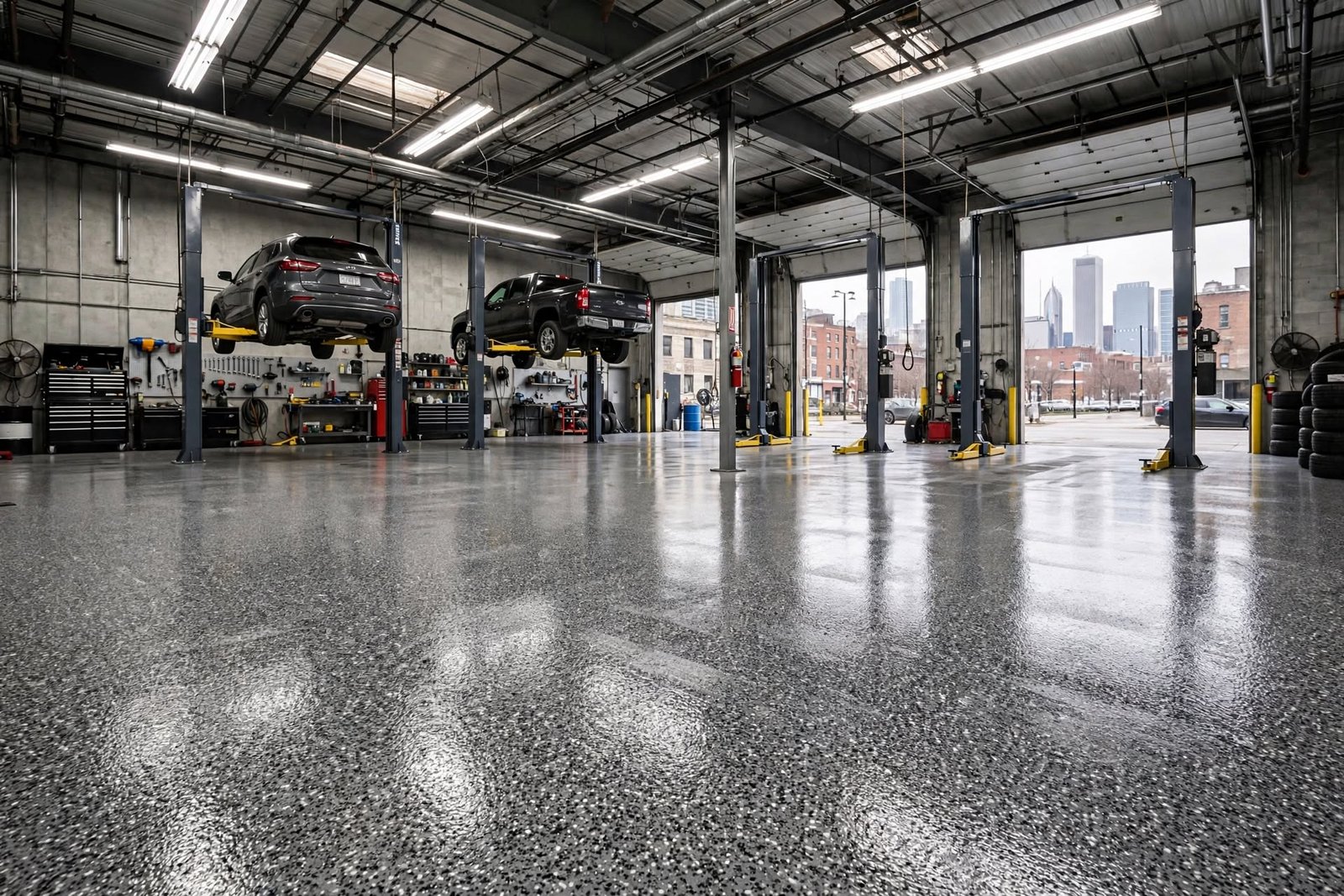
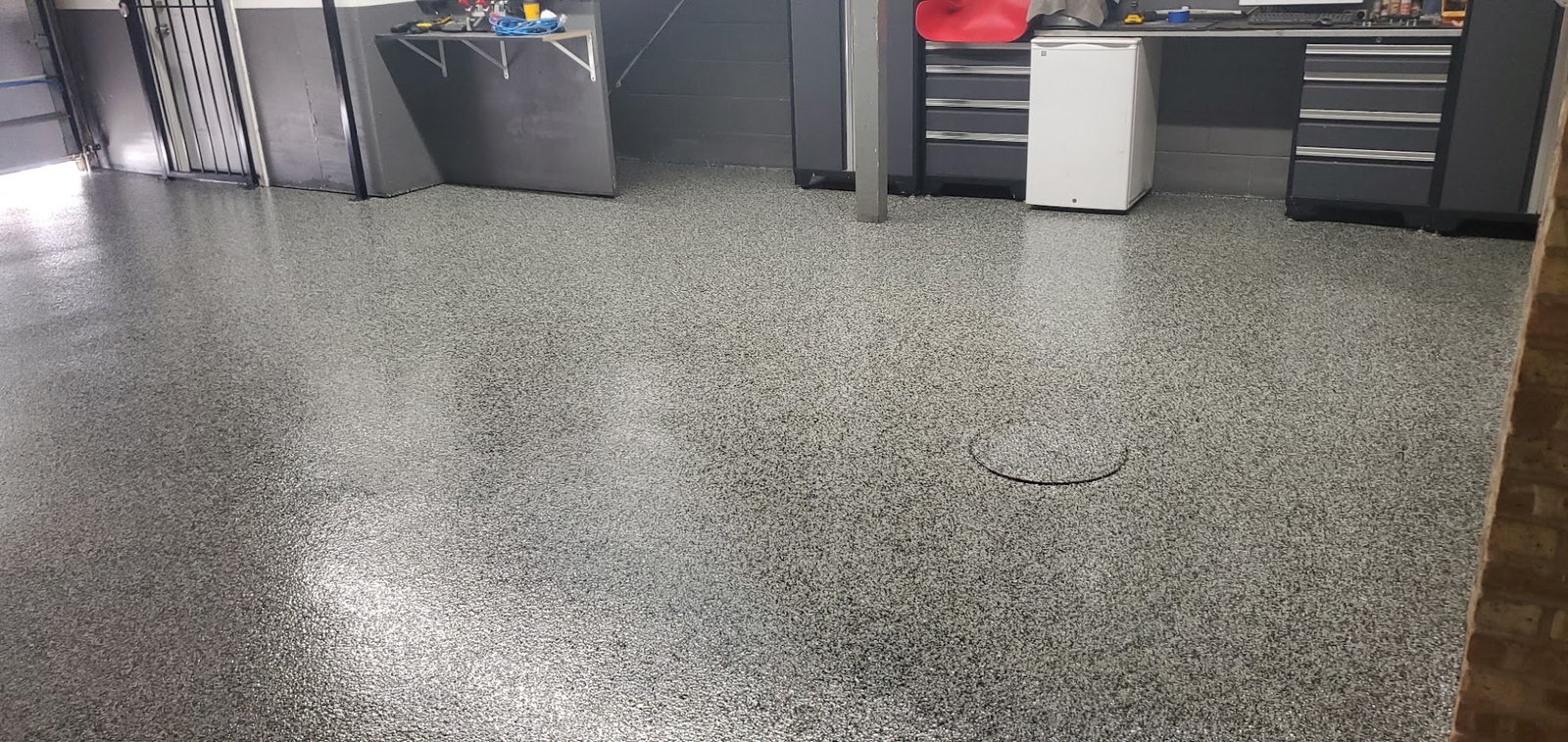
For Chicago garages, we usually recommend an epoxy or polyaspartic flake system. Polished concrete is porous enough that salt brine can stain and damage it. See the garage floor epoxy guide.
What about basements?
Both work. Polished concrete is great on a dry, good-looking slab; epoxy is better when you want color or need to cover old flooring glue. See basement flooring options.
Cost over time
Polished concrete has no coating to replace, so lifetime cost can be very low. Epoxy may need a topcoat refresh in high-traffic areas down the road. Read polished concrete cost for more detail.
This article is part of our complete guide to commercial and industrial floors.
Frequently asked questions
Is polished concrete cheaper than epoxy?
Per square foot they are often close. Polished concrete can cost less over time because there is no coating to renew.
Which is more slippery, polished concrete or epoxy?
Both can be slick when wet. Epoxy can be made more slip resistant with flake or grit additives.
Can you put epoxy over polished concrete?
Yes, but the polished surface must be ground back so the coating can bond.
Which lasts longer?
Polished concrete can last the life of the slab. A well-built epoxy system lasts many years and can be recoated.
Epoxy, flake, metallic and polished concrete installers serving Chicagoland since 2006. Every article is written from what we see on real slabs.
Get a written number for your floor.
On-site measure and moisture test at no cost.
(773) 908-4913Request Estimate